Network History
WestNet Wireless — Deployment Timeline
From a 1982 birth in Bridgeland to a 14-year-old's idea in 1996 — the complete story of WestNet N.A. and its founder Abdul Traya: Calgary's longest-running independent wireless internet network, 28 years of building the city's wireless future.
-
1996–1998Origins — The Idea, the Domain, the Company1996: Abdul Traya, age 14 and in junior high school in Calgary, conceives the idea of building "a different kind of internet service provider — because things were so expensive." He launches Traya Net — one of Calgary's first web hosting providers — on the MCI WorldCom backbone as a Tier 1 provider. The seed for WestNet is planted.


July 1998: While a student at Western Canada High School (WCHS), Traya registers the domain AppleiMac.com — two months before Apple's iMac G3 launch. A high-profile legal dispute follows. CNN, MSNBC, CBC, CTV, The New York Times, and CNET all cover the story. Traya appears on prime-time and late-night talk shows during the dispute.
1998: After leaving WCHS, Traya founds WestNet Wireless Communications Ltd. — initially running web-hosting from his parents' basement. Traya Net Inc. becomes the parent holding company; westnet.ca renewed. WestNet Webmail launches at webmail.westnet.ca — @westnet.ca browser-based email for Calgary subscribers from day one.
April 27, 1999: AppleiMac.com dispute settled — Apple receives the domain; settlement amount described as "almost enough to retire on." Time Magazine interviews Traya in June 1999. Settlement proceeds directly fund WestNet's wireless R&D. Action News digital media division conceived this year.
2000: WestNet Action News launches as a digital media and journalism division — covering Calgary news and events. Represents WestNet's earliest expansion beyond ISP services into content and broadcasting, a thread that continues through the 2014 MHSV's 16.1 WESTNET News HD broadcast channel. -
2001WireCELL Announced + Calgary's First Community Wi-FiAugust 2001: Abdul Traya announces the WestNet WireCELL solution — a concept for low-cost cellular phone service delivered over Wi-Fi and VoIP on CDMA networks, predating commercial Wi-Fi calling by over a decade.
September 2001: WestNet publicly announces its intent to enter Canada's competitive wireless market as an independent CDMA carrier.
2001: WestNet launches the Albert Park / Radisson Heights Community Wi-Fi Network — Calgary's first community wireless network. Entirely self-funded by Abdul Traya, supported by Traya Net using an MCI WorldCom backbone, the non-profit network provides free internet access to an underserved east Calgary community. Full history
2001: WestNet GoodPeople™ Insurance launches — auto & home insurance for USA & Canada, built as an extension of WestNet's cross-border network services. Details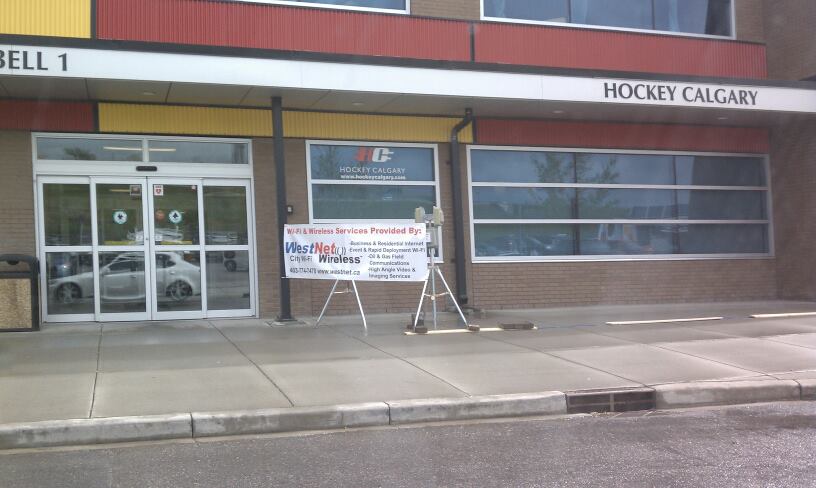
-
2002Calgary's First Commercial Wi-Fi Network + Speed Test LaunchedDecember 2, 2002: WestNet announces Calgary's first commercial Wi-Fi network. The initial deployment covers a pilot zone near central Calgary — proof-of-concept for the full city-wide rollout planned for 2006.
2002: WestNet launches its own online speed test tool at speedtest.westnet.ca — giving subscribers a local, WestNet-native benchmark for measuring connection performance. At the time, internet speed tests were uncommon; WestNet was among the first Canadian ISPs to offer one.
2002: WestNet's subscriber webmail service — launched in 1998 alongside the company's founding — continues operating at webmail.westnet.ca. One of Canada's first ISP-hosted browser-based email services, providing @westnet.ca addresses to Calgary subscribers from the beginning. WestNet VPN tunnel access also launched this year for encrypted connectivity over city Wi-Fi. -
2004Formal Network Infrastructure Deployment Begins
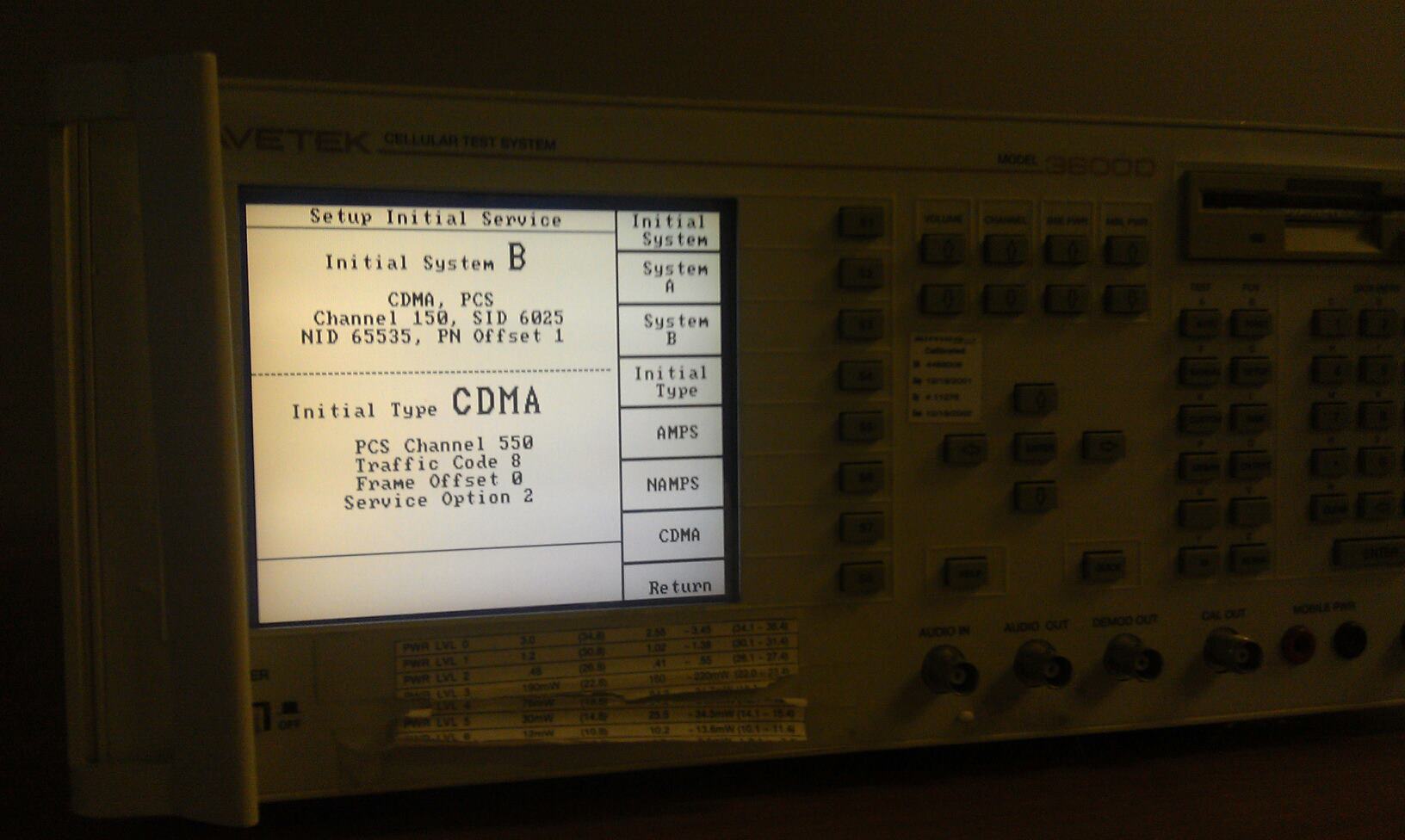 WestNet commences permanent base station installation in Calgary. Site agreements, equipment procurement, frequency planning, and backhaul negotiations are finalized. The physical groundwork for the 2006 commercial city-wide launch is laid.
-
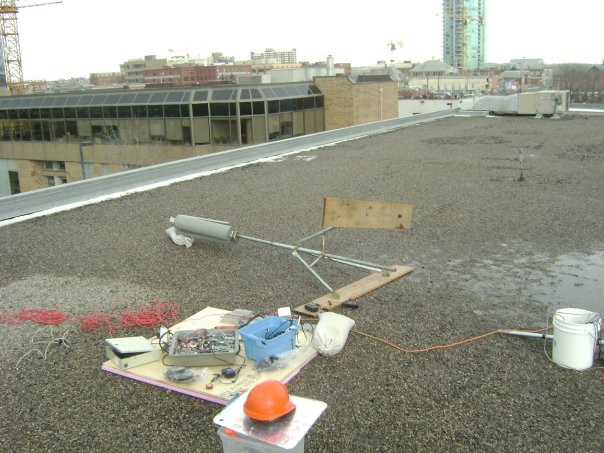
2005Motorola & DDL-Networks PartnershipsSeptember 24: DDL-Networks commits to invest in WestNet once the network achieves coverage of 300,000 population in the Calgary Metropolitan Area.
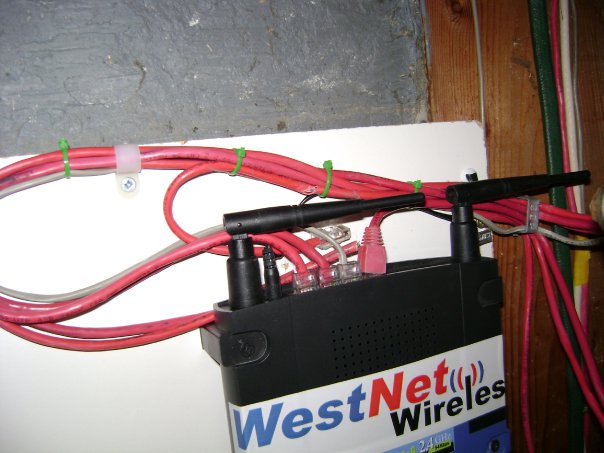
October 3: WestNet selects Motorola for base station infrastructure and DDL-Networks as its dedicated Wi-Fi adapter manufacturer. DDL-Networks agrees to produce 1,500 WestNet-branded client adapters compatible with the proprietary soft-handoff system.
-
2006City-Wide Wi-Fi Launch + CDMA EV-DO + Ookla Speed Test PartnershipWestNet's most transformative year — pilot to full commercial city-wide network:
Feb 8: Two primary Calgary base station locations finalized.
Feb 22: Coverage launches in East Downtown, Inglewood, Albert Park at 10 Mbps / 5 Mbps; simultaneous launch in Radisson Heights, Forest Lawn, South Franklin Industrial Park at 7 Mbps.
Mar 5: WestNet becomes first non-major carrier in Canada to offer ITVE wireless roaming.
Apr 4: Nortel Networks CDMA 1X-EV-DO base station activated in Central Calgary — WestNet's first 3G data capability.
Mid-2006: WestNet joins Ookla's Speedtest.net network, adding an Ookla-certified speed test node to speedtest.westnet.ca — giving subscribers results comparable to tests used by ISPs worldwide.
Nov 1: Coverage extends to Foothills Industrial Park and greater Forest Lawn.
Nov 2: Pricing announced — $20.99/month or $199.99/year.
Dec 20: Patent filed for proprietary WN Wi-Fi soft-handoff protocol.

-
2007Open CDMA Network Plans + AMPS Regulatory PushJanuary: WestNet announces plans to open its CDMA network to any compatible device — mirroring what Verizon Wireless would announce for its own network later that same year.
April: WestNet states intent to launch an AMPS analog network if Industry Canada licensing is approved, targeting rural areas underserved by digital-only networks.

 WestNet continues expanding its Calgary footprint, signing new rooftop and building agreements, and actively courting potential investors for a planned national CDMA rollout.
-
2008AWS Spectrum Bid — Application, Rejection & AppealFeb 16: WestNet Comprehensive Launch Summary issued — projecting $1.5M / $4.5M / $7.5M revenue for 2008–2010; seeking $1.5M capital. Read summary
Feb 21: Abdul Traya publicly calls out Industry Canada's spectrum auction as unfair to smaller carriers. Read statement
Feb 25: Formal AWS spectrum auction application submitted.
Mar 31: Application rejected — WestNet sought 800 MHz; auction was for 2.8 GHz. Appeal filed with Ministry of Industry.
 Jul 10: WestNet publicly pledges to never charge for incoming text messages. Read release
-
2009EV-DO Rev.A Upgrade + Downtown Wi-Fi Pilot + 10,000 UsersFeb 13: WestNet launches Downtown Calgary Wi-Fi pilot using the most powerful wide-area Wi-Fi transmitters deployed by any carrier in Canada at the time.
Feb 20: Pilot expanded — additional high-power access points extend coverage deeper into the downtown core.
Mar 23: All EV-DO base stations upgraded to Revision A — peak 3.1 Mbps down / 1.8 Mbps up with improved QoS for voice and video.
Jul 20: WestNet reaches 10,000 registered users — a landmark for a self-funded, debt-free independent wireless operator covering 20 km² of Calgary.
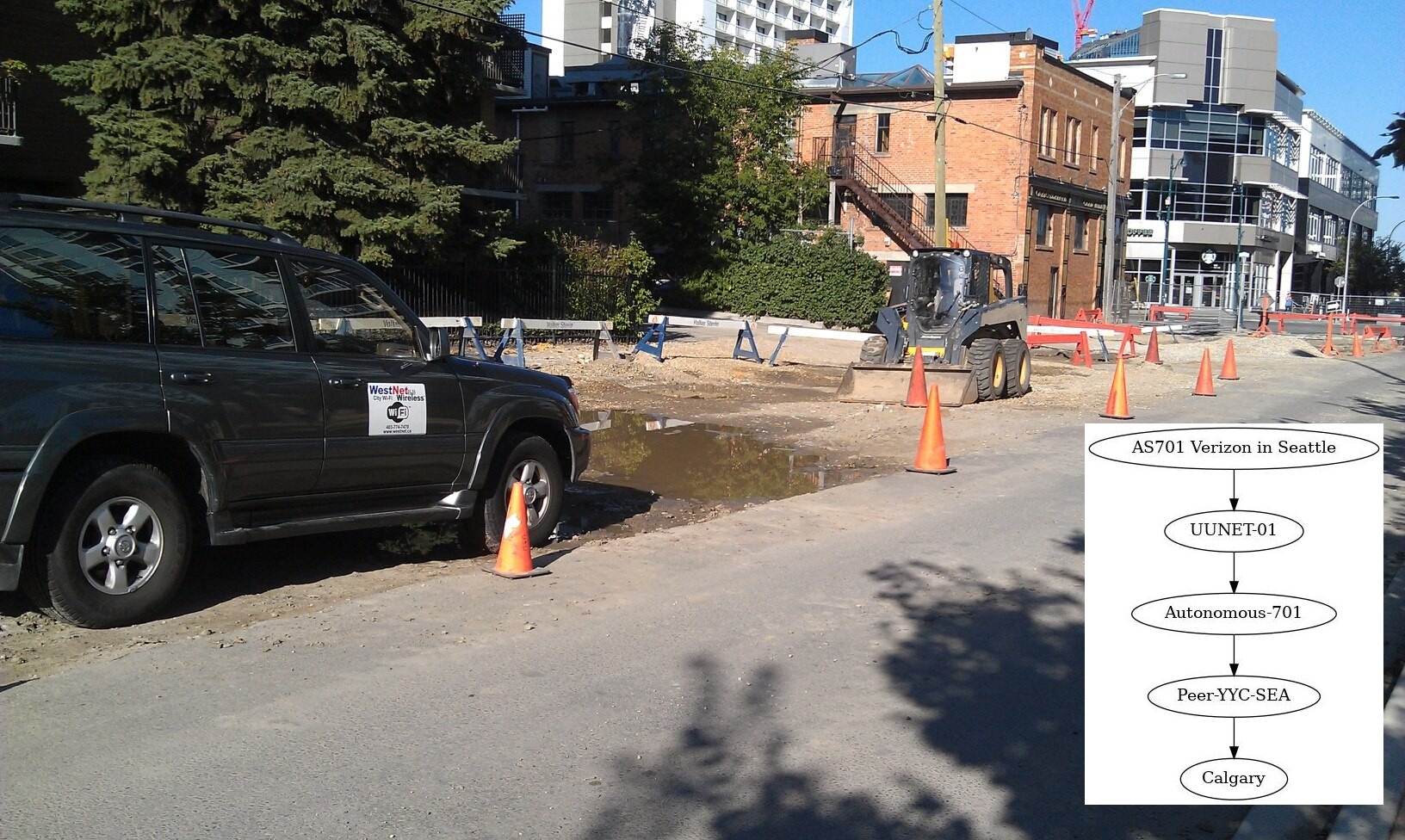
2009: WestNet establishes its Verizon global network partnership via Verizon's AS701 backbone — enabling US-based IP termination for WestNet subscribers and providing a global backhaul for future service expansion. This partnership would underpin WestNet's US-IP gateway product (2016) and the dedicated VPN service (2025).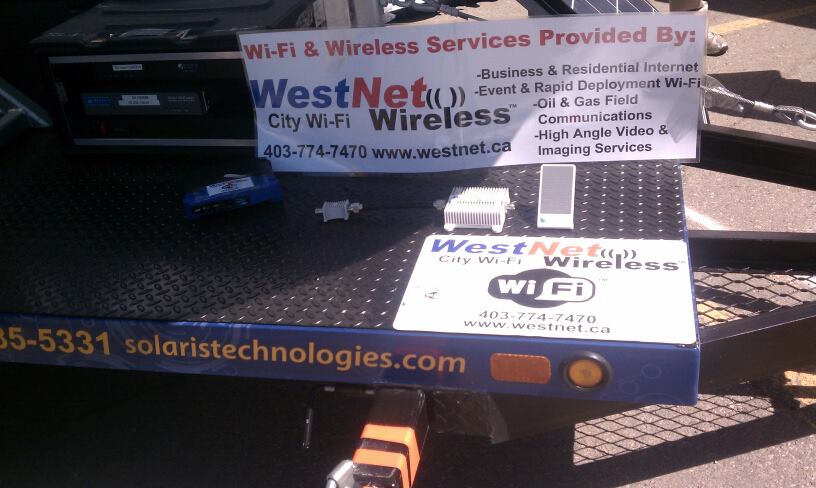

-
201017,500 Subscribers — National Media Profile — CCTS RegistrationWestNet's strongest growth year to date. The oil-boom economy driving Calgary's expansion was generating new subscribers at unprecedented speed.
By mid-2010 WestNet had 17,500 subscribers, adding approximately 500 per week. Coverage spanned 20 km² centred on downtown Calgary. Corporate clients were routing rooftop building-to-building links through WestNet's towers for "near-fibre quality" reliability — a business segment growing rapidly as downtown Calgary added new towers and commercial tenants.
August: Business in Calgary magazine — "Ground Breaking Wireless" — an eight-page profile of Abdul Traya and WestNet. The company had 6 full-time and 11 contract staff, was entirely self-funded, carried zero debt, and was described as "the Wal-Mart of wireless" with plans starting at $10/month. Plans for a Toronto launch were underway. Read the feature
December: WestNet joins the Commissioner for Complaints for Telecommunications Services (CCTS) — giving every WestNet subscriber the same independent dispute resolution path available to Bell, Telus, and Rogers customers. A major statement of carrier-grade commitment. Read announcement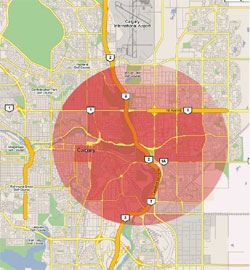
-
201130,000+ Users — National Recognition — Corporate Expansion2011 was the year WestNet's momentum became undeniable. Calgary's oil-boom population surge was delivering new subscribers faster than any year prior. The 500-per-week growth rate from mid-2010 continued, pushing the total subscriber base well past 30,000 by year end.
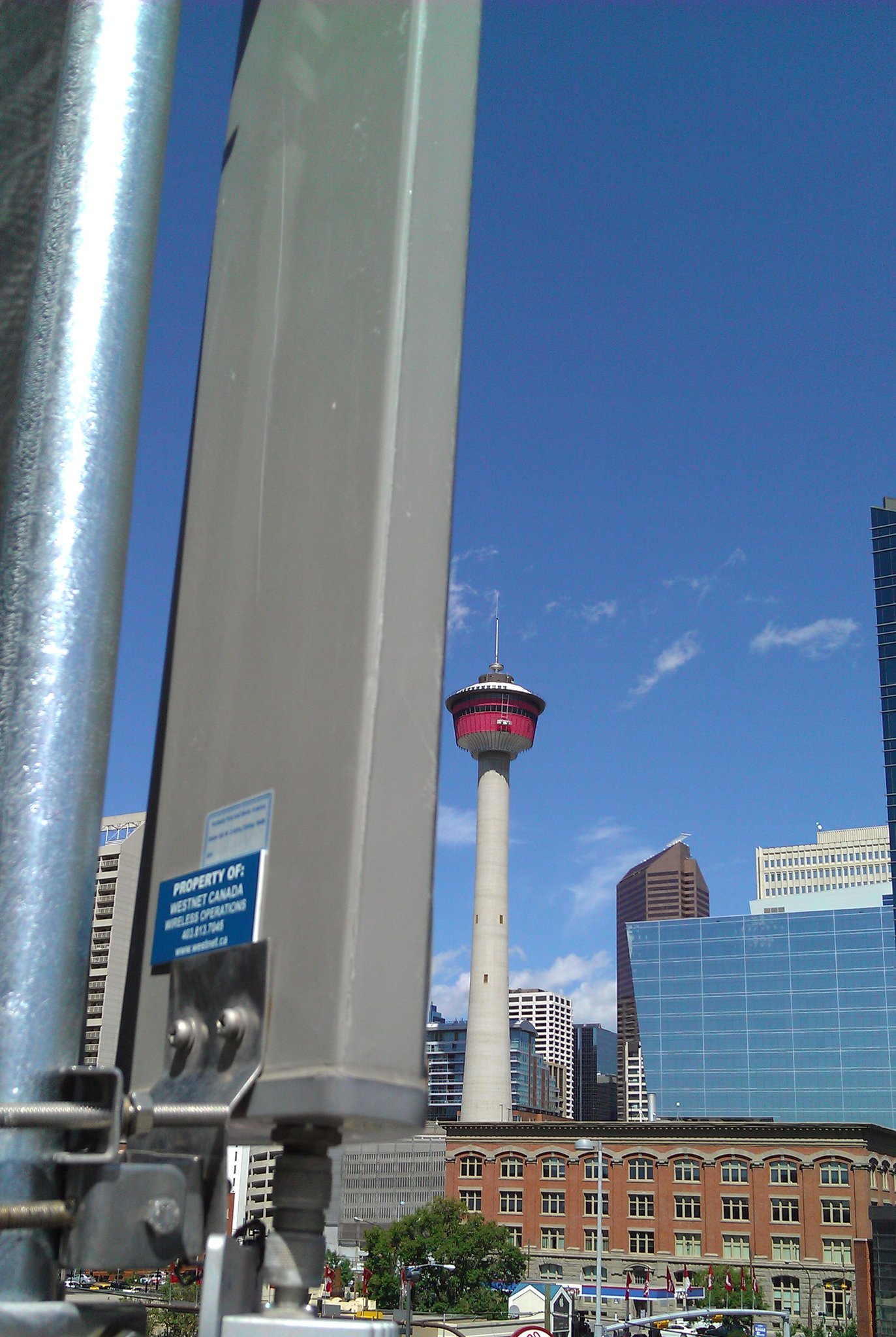
Corporate rooftop network: WestNet's building-to-building link program expanded significantly. Corporations were installing directional antennas on Calgary office towers pointed at WestNet's downtown infrastructure, creating dedicated high-speed connections described as "near-fibre quality." This segment became a meaningful revenue driver alongside the consumer base.
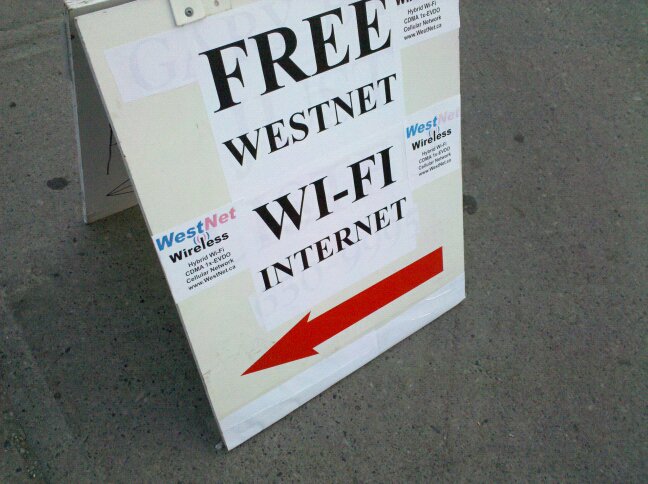
June 2011: The London Free Press cited WestNet as the operator of one of Canada's earliest and most successful free downtown Wi-Fi systems — noting it had been running since 2002 and quoting Abdul Traya: "People love it. Tourists use it to find maps, locations and stuff on their iPads." National recognition was growing. Read the article
Max-Bell Centre area: Coverage extended to the Max-Bell Centre area in northeast Calgary, continuing the systematic expansion outward from the downtown core.
Network reliability: Lessons from the 2009–2010 rapid subscriber growth drove targeted reliability upgrades at the six primary tower sites. Backhaul redundancy was improved to eliminate single points of failure.
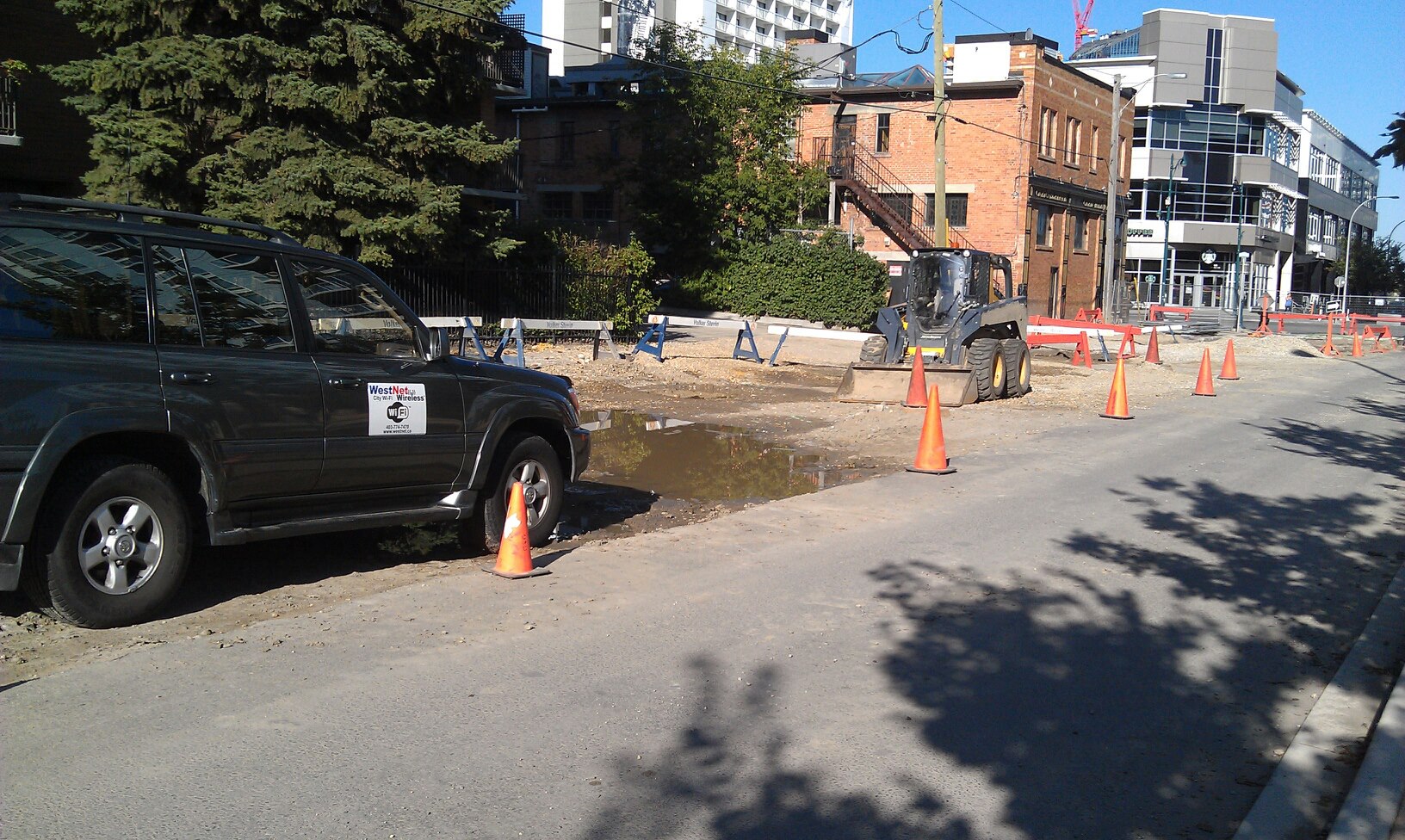 Toronto expansion planning: WestNet continued scoping the Toronto market — site surveys and potential tower locations were being evaluated. Abdul Traya had publicly stated Toronto was the next launch target.
-
2012Network Doubles Capacity — 802.11n Rollout — MDU & Business TierCalgary was Canada's fastest-growing major city in 2012, driven by the oil sands boom. WestNet's network was under its heaviest load to date, and 2012 was defined by the infrastructure upgrades needed to handle it.
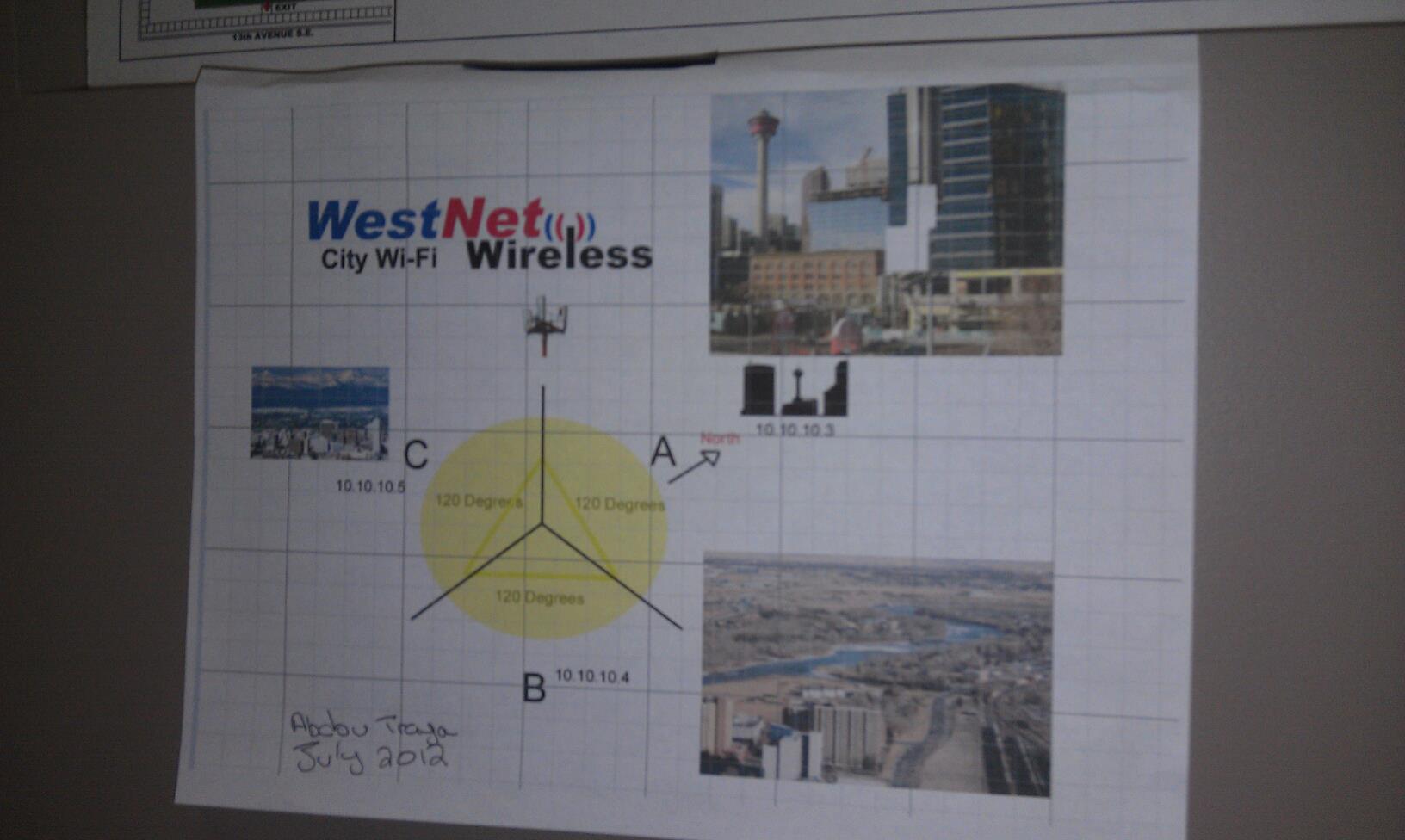
Capacity doubled: Systematic hardware upgrades at WestNet's six primary tower locations doubled total subscriber capacity. New radios, improved sectoral antennas, and upgraded backhaul links at each site increased aggregate throughput and lowered congestion during peak-hour usage.
802.11n deployment: WestNet upgraded base stations city-wide to 802.11n (Wi-Fi 4), significantly improving spectral efficiency, MIMO performance, and support for 5 GHz clients. Subscribers with 802.11n adapters experienced noticeably faster speeds and more stable connections — particularly in multi-unit residential buildings where 2.4 GHz congestion had been an issue.
Multi-dwelling unit (MDU) program: WestNet launched a dedicated MDU service tier for Calgary apartment and condo buildings, providing building-wide wireless internet as an alternative to Shaw cable or TELUS ADSL. Property managers could offer WestNet as a building amenity, with WestNet handling installation and subscriber management. The MDU program tapped directly into Calgary's surging condo market.
Network management platform: A new real-time network monitoring system was deployed across all tower sites, enabling remote fault detection and significantly reducing mean time to resolution for service issues.
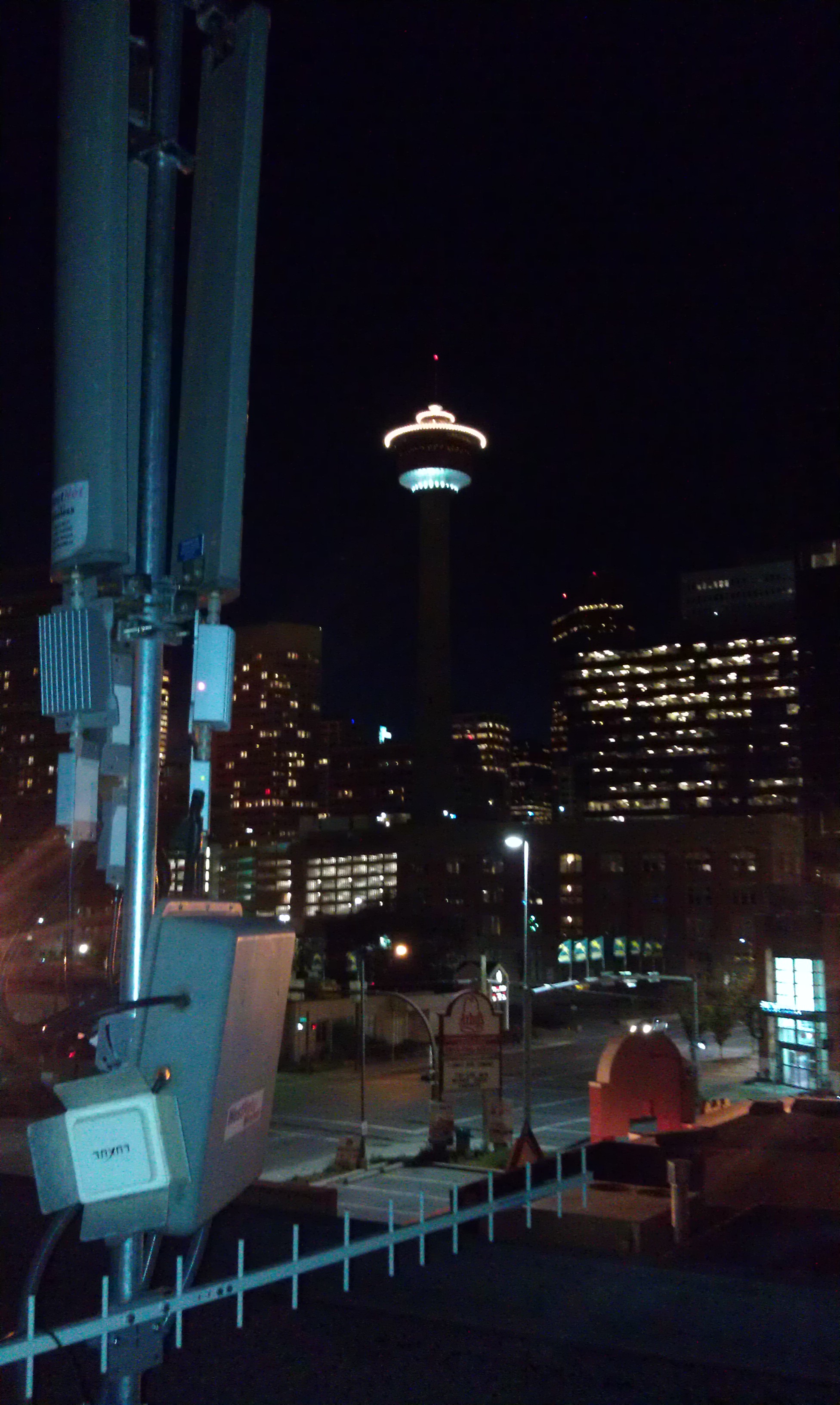
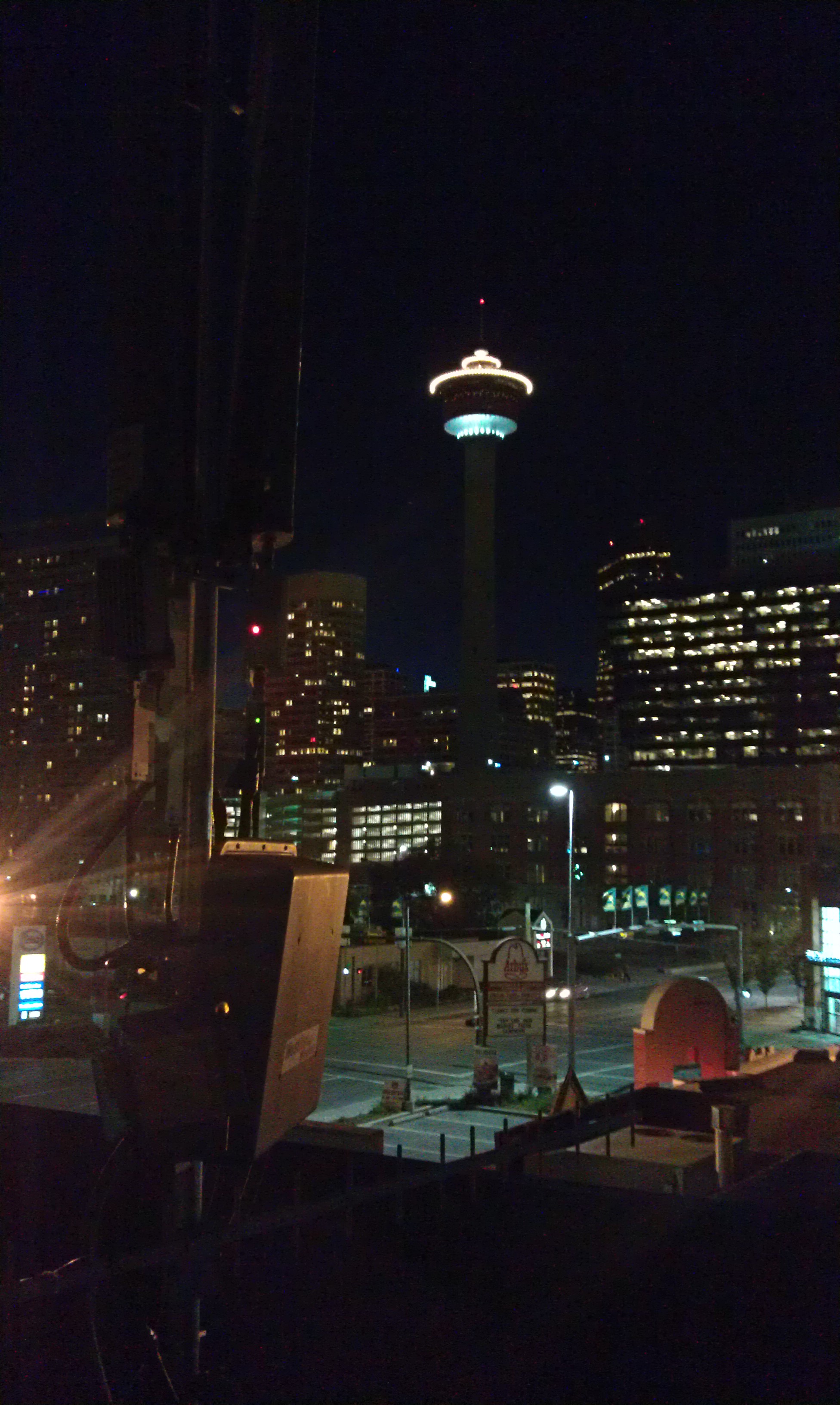
Coverage expansion: New tower site agreements were executed in southeast and northwest Calgary, laying the groundwork for 2014's nine-community expansion. WestNet's engineers conducted line-of-sight surveys across the Calgary flatlands to identify optimal locations for maximum coverage-per-site.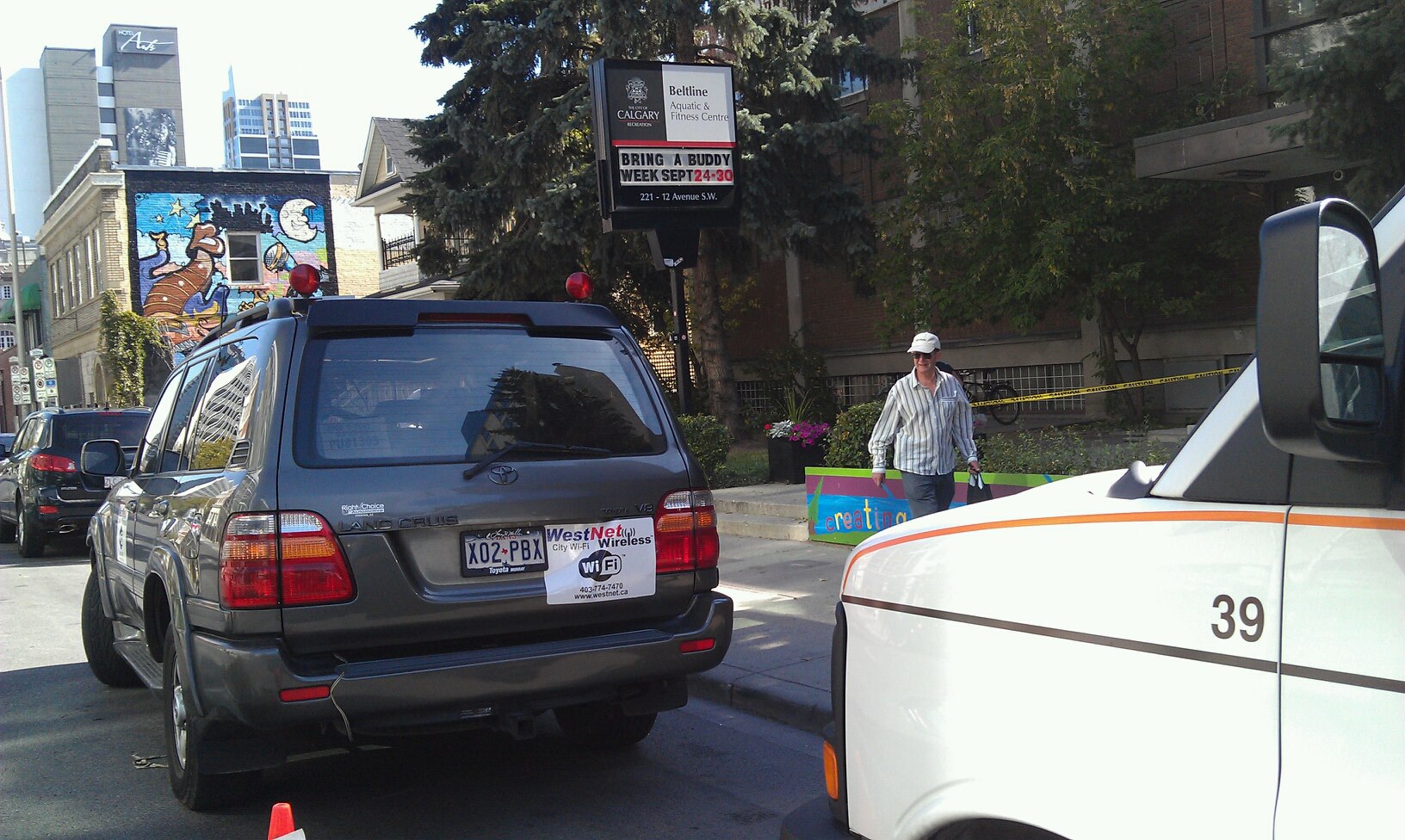
CalgaryFinder.com peaks — $1 billion in real estate: Launched in 1997 by Abdul Traya as one of Calgary's earliest online listing portals, CalgaryFinder.com reached its highest annual volume in 2012: over $1 billion in cumulative real estate listed through the platform. The site served realtors, dealerships, and private FSBO sellers with a feature depth that set it apart from contemporaneous Calgary-specific portals.
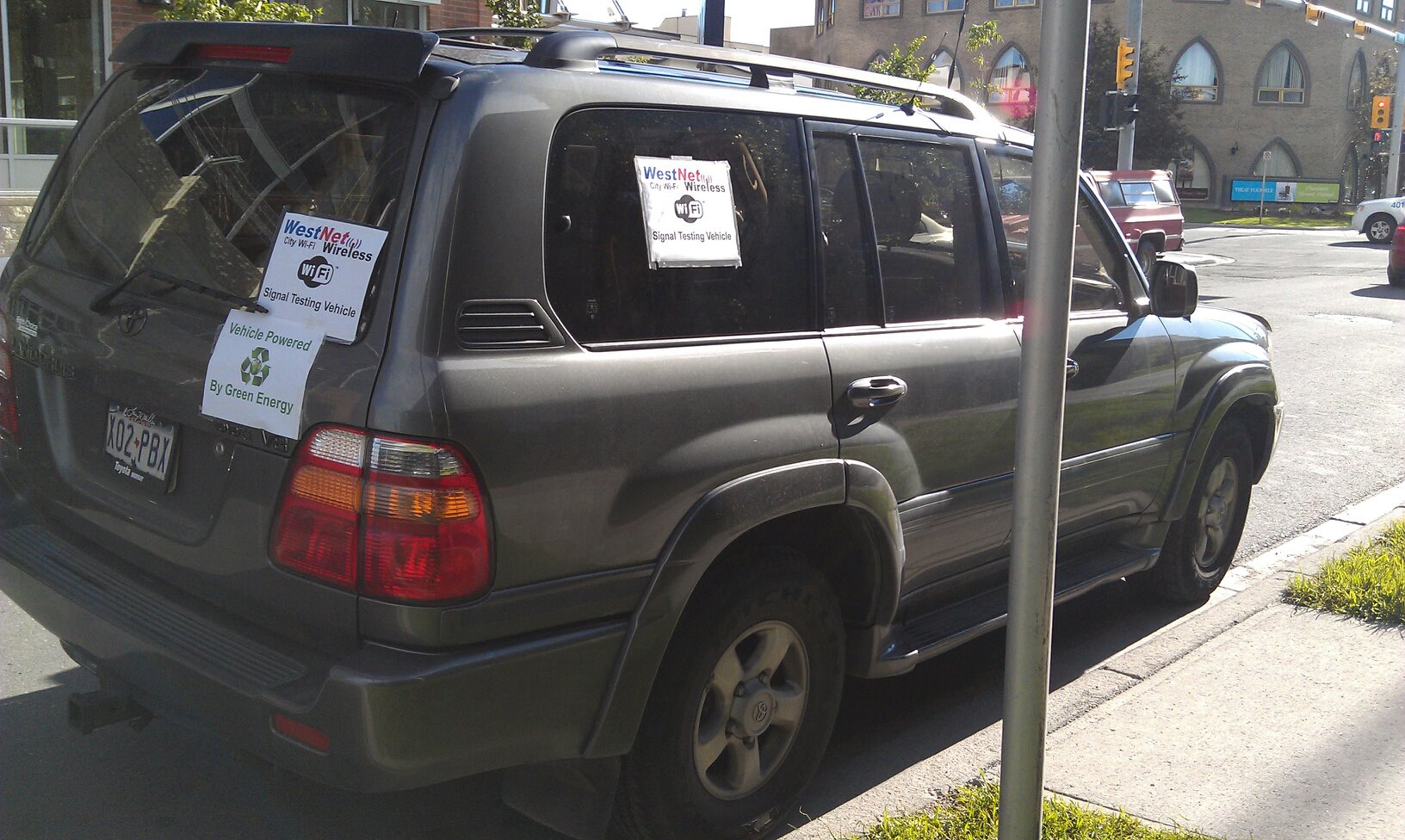
Autonomous Toyota Land Cruiser program — June 2012: WestNet initiated its autonomous vehicle development program in Calgary. The platform: a 2000 Toyota Land Cruiser 100 Series (4.7 L 2UZ-FE V8). The system integrates LIDAR, radar, and Sony CMOS sensors via a custom WestNetV2 CANbus protocol; control loops run at 0.002 ms intervals on a Quadcore Intel QX9650. Steering is managed through a proprietary electro-hydraulic override module — no factory drive-by-wire required. The program targets SAE Level 2 autonomy and integrates with WestNet's city-wide Wi-Fi for live telemetry and over-the-air updates. Full technical documentation →
-
2013802.11ac City-Wide + June 2013 Calgary Flood — WestNet Stays Online2013 was the year WestNet's wireless-first architecture proved its value in the most dramatic way possible.
802.11ac (Wi-Fi 5) deployment: WestNet upgraded base stations across the Calgary network to 802.11ac early in the year, more than doubling aggregate throughput and cutting client latency. Multi-user MIMO enabled better simultaneous connections in the high-density downtown core — critical as the subscriber base continued growing.
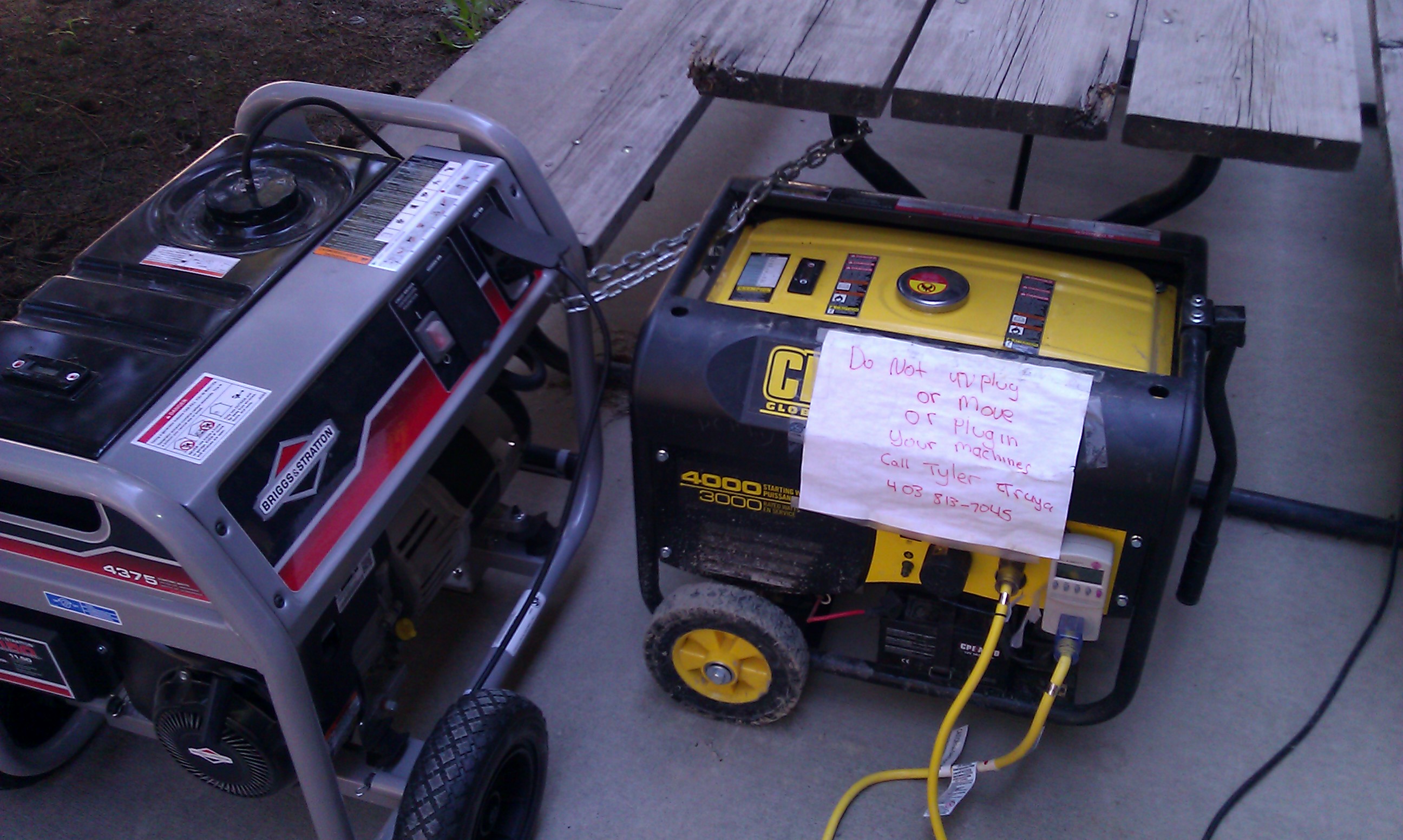
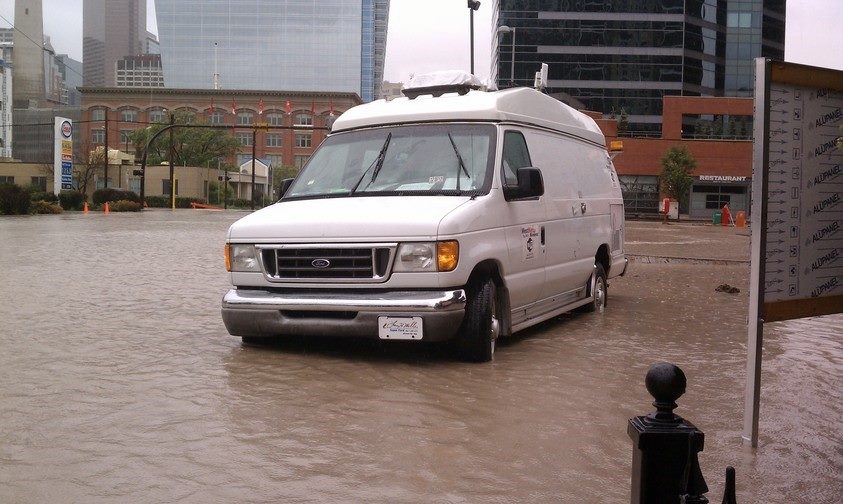 June 20–21, 2013 — The Calgary Flood: The Bow and Elbow rivers overflowed in what became one of Canada's worst natural disasters. Downtown Calgary was evacuated for the first time in history. Approximately 100,000 residents were displaced. The flood caused an estimated $6 billion in damage and knocked out power, wired telephone, and underground cable/fibre infrastructure across entire Calgary communities.
Shaw Cable, TELUS, and other carriers relying on underground conduit and fibre experienced widespread service outages as floodwaters damaged buried plant. WestNet's rooftop-mounted wireless infrastructure — elevated above the flood line on commercial building rooftops — remained operational throughout the disaster. Where wired ISPs went dark, WestNet stayed online.
WestNet served as an emergency internet backbone for businesses, emergency services, and residents in affected areas. The flood was a watershed moment (literally) for WestNet's credibility: when every other carrier's infrastructure was literally underwater, WestNet's antenna-on-a-rooftop architecture kept Calgary connected. In the weeks and months following the flood, WestNet received a significant influx of corporate and residential clients specifically seeking wireless backup connectivity to eliminate dependence on underground cable and fibre.Post-flood growth: The flood dramatically accelerated WestNet's corporate client acquisition. Building managers, law firms, financial advisors, and city departments — all of whom had lost wired internet during the flood — converted to WestNet as either a primary or backup connection. WestNet's pitch became simple and undeniable: "We were the ISP that stayed online during the worst flood in Calgary's history."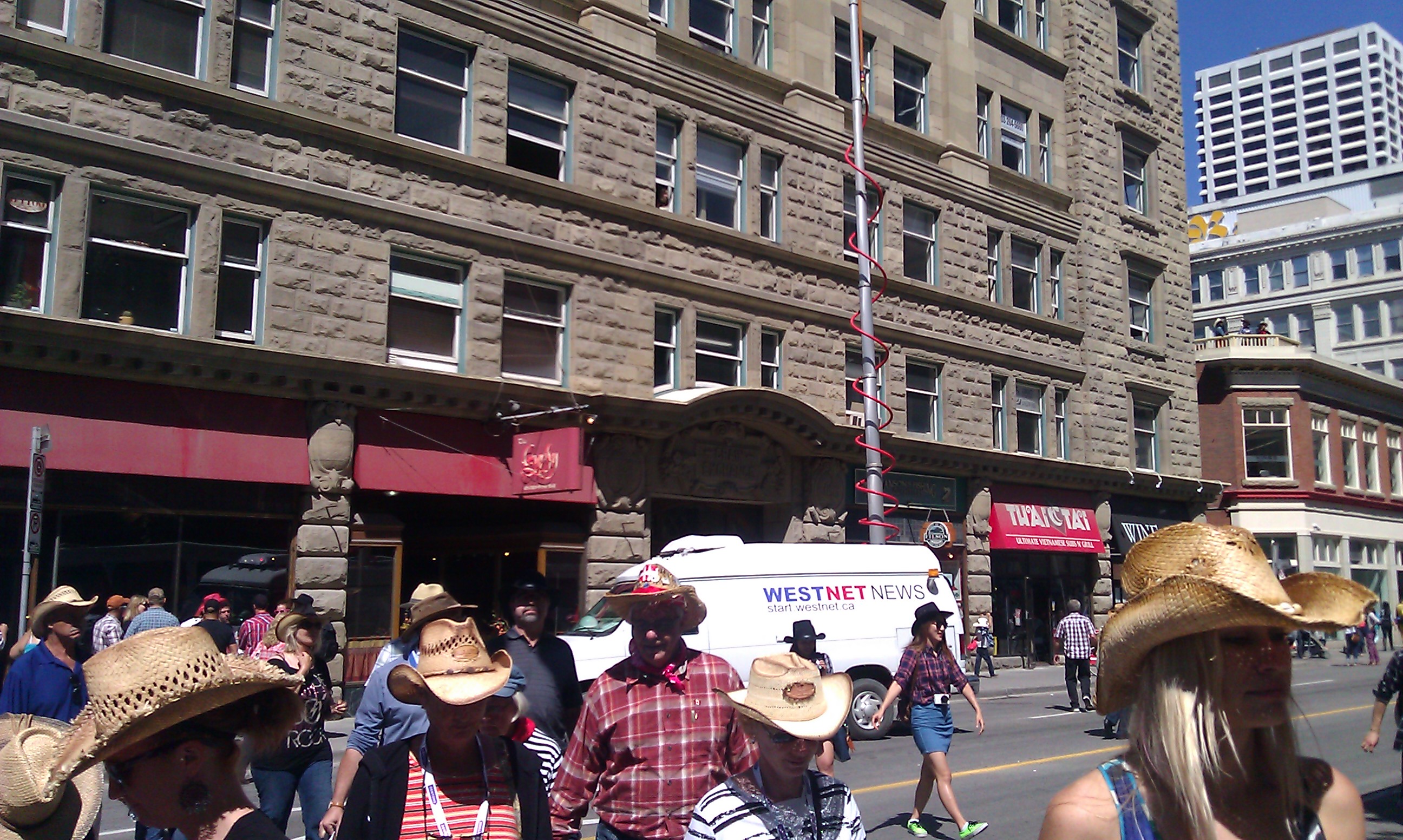
-
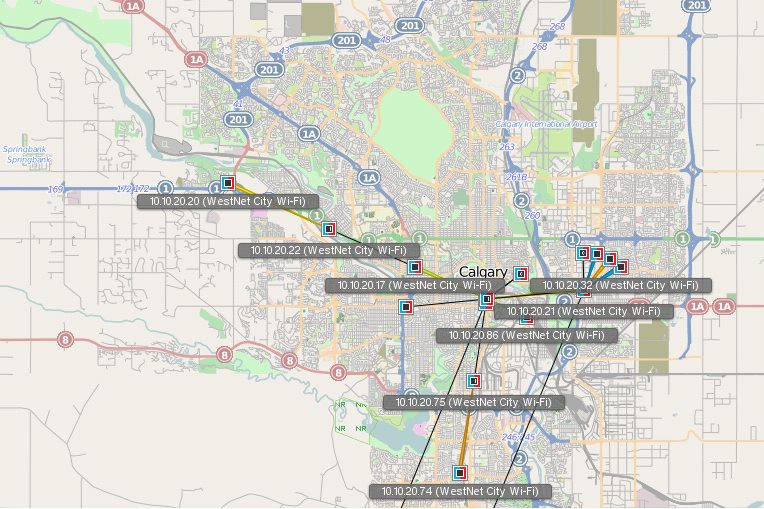
2014–2015Nine New Communities + Fiber Backhaul — 100 Mbps Foundation2014: Leveraging the post-flood corporate momentum and the 2012–2013 tower site agreements, WestNet adds nine new Calgary communities: Forest Lawn, Marlborough, Renfrew, Tuxedo Park, Highland Park, Ramsay, Bowness, Killarney/Glengarry, and Sunalta. View current coverage at westnet.ca/coverage.htm
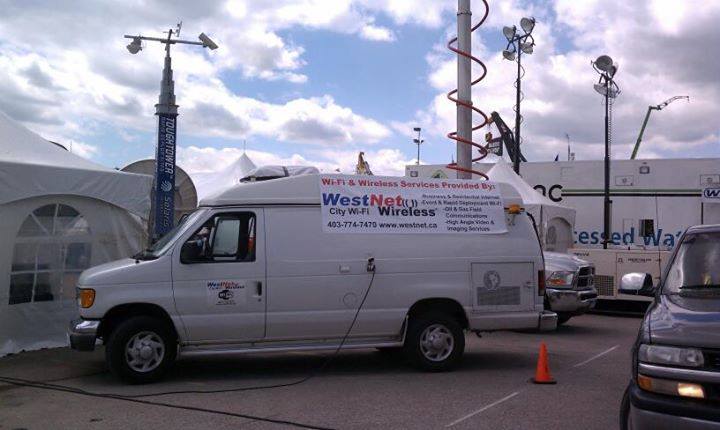
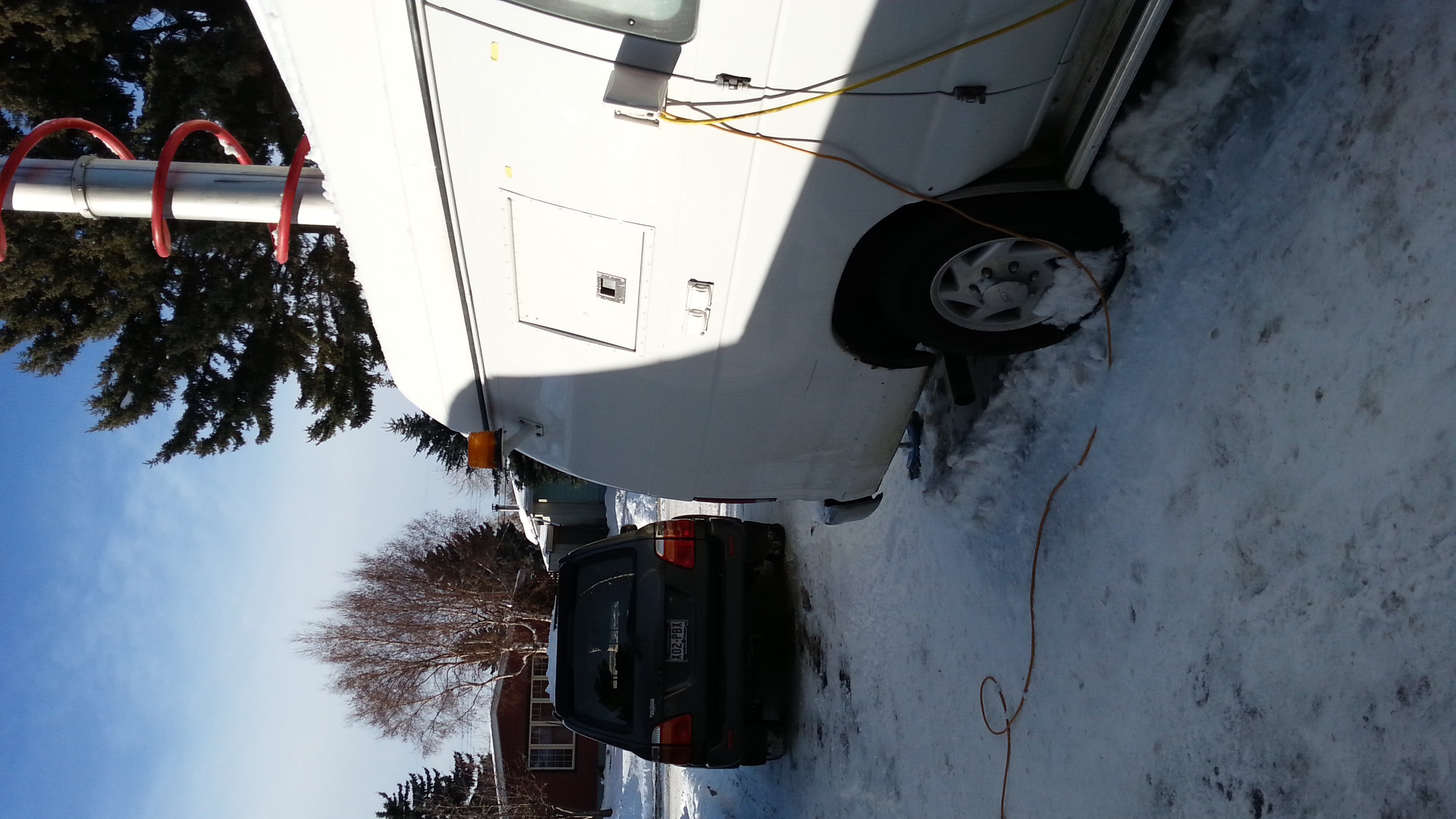
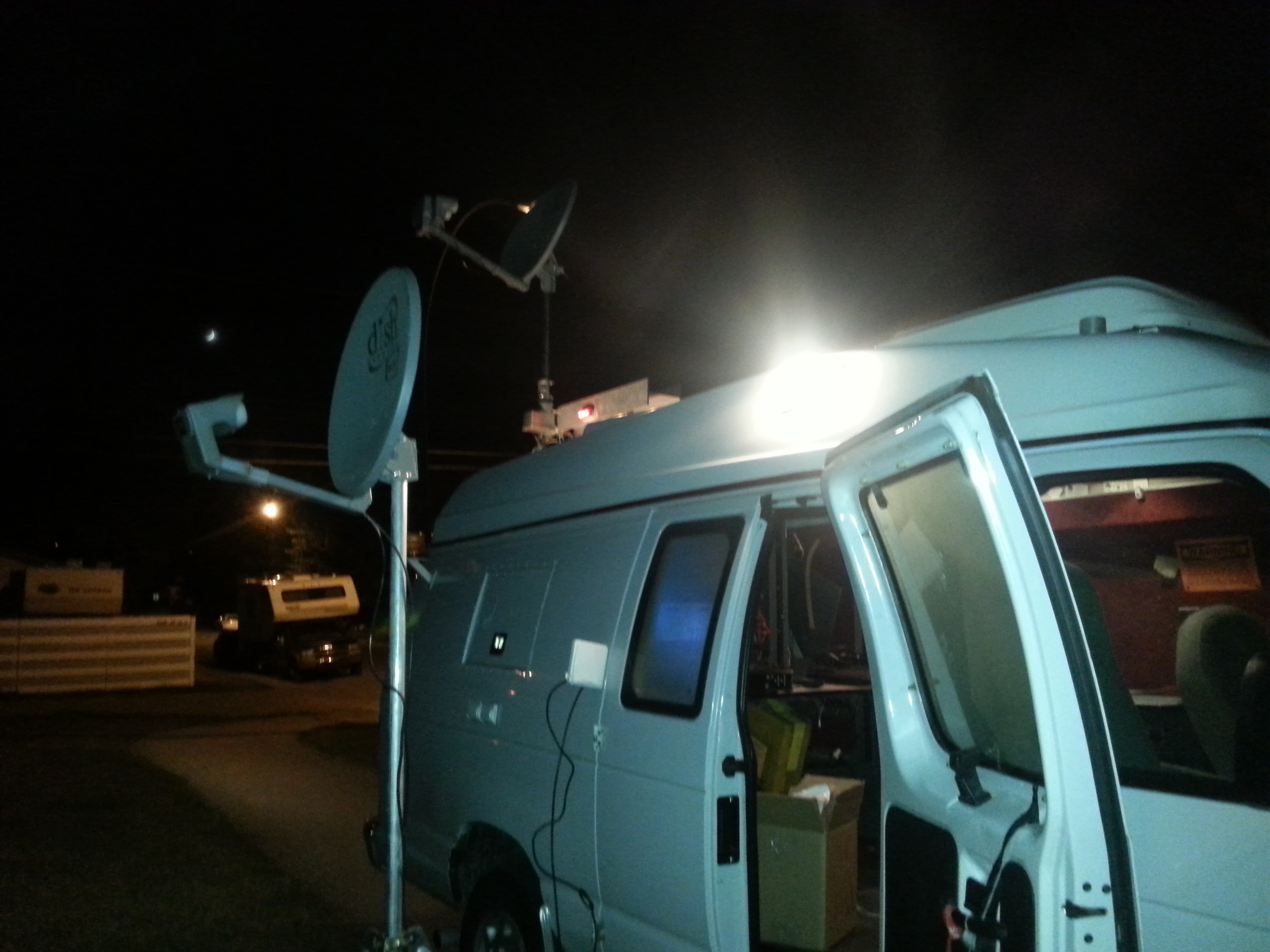
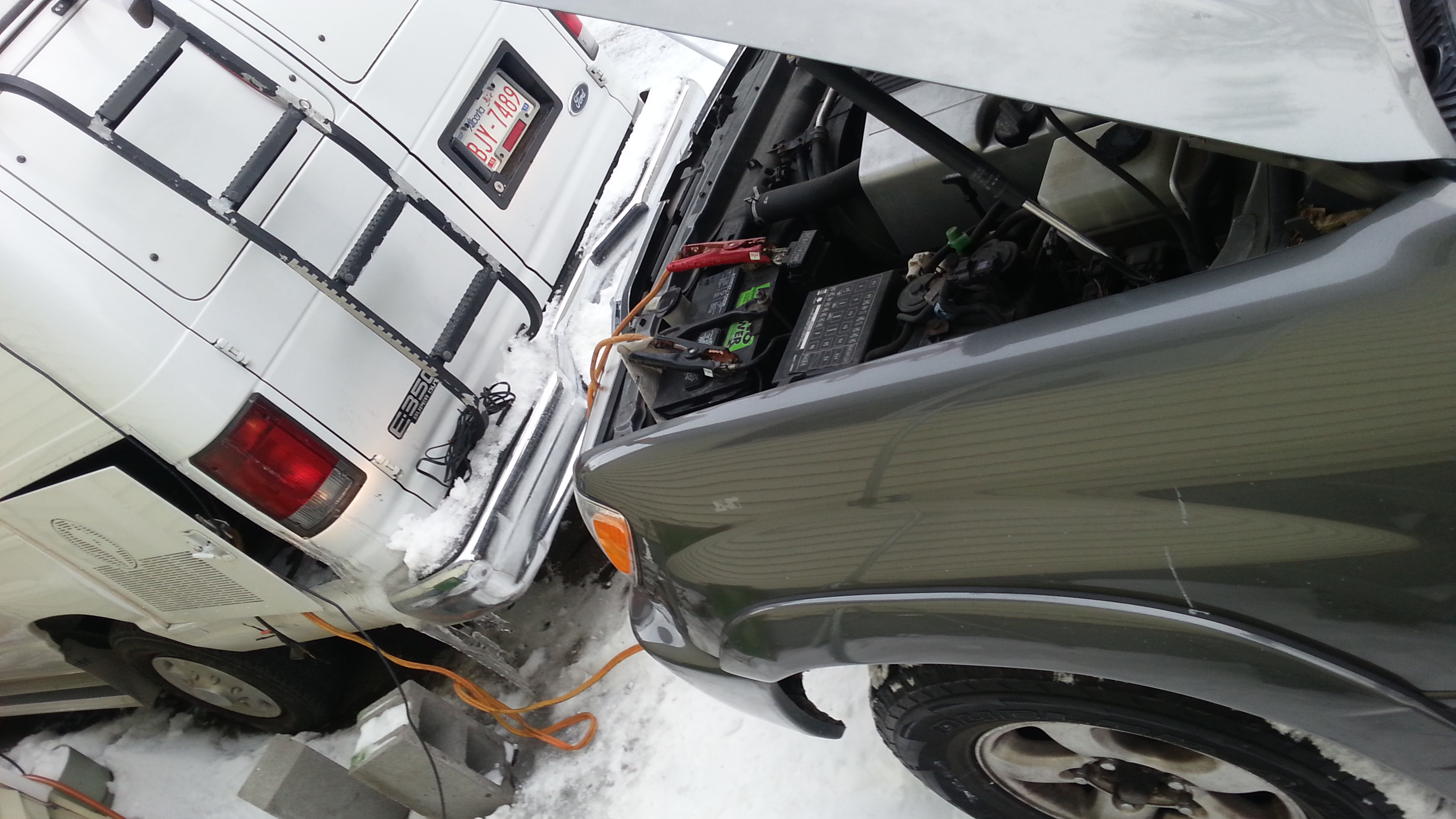
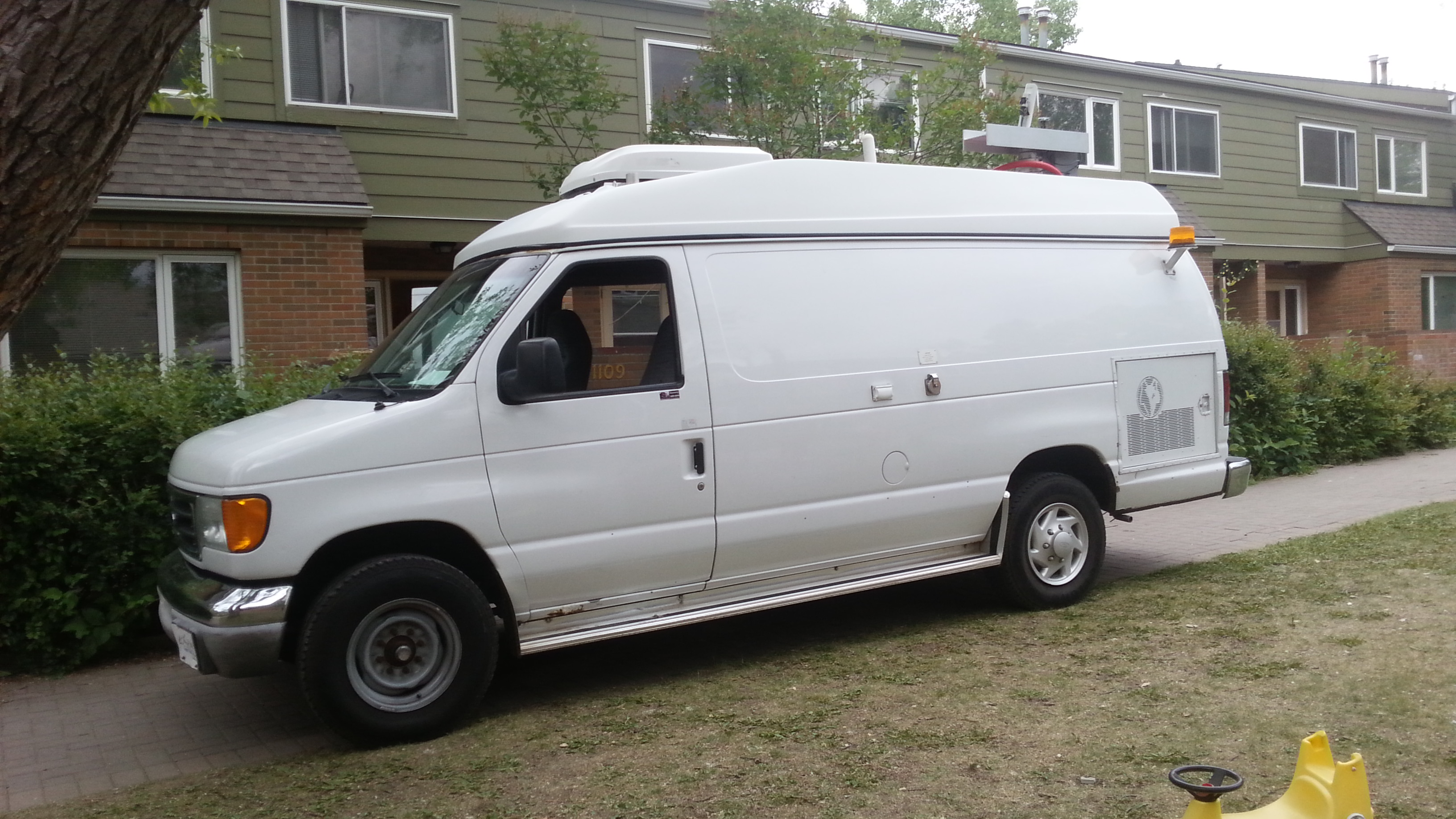
WestNet's Mobile HotSpot Vehicle (MHSV) — a fully self-contained broadcast and wireless operations van — was operational in the field by late 2014, equipped with rack-mounted networking gear, dual satellite uplink dishes, and an onboard WestNet broadcast system running channel 16.1 WESTNET News HD.
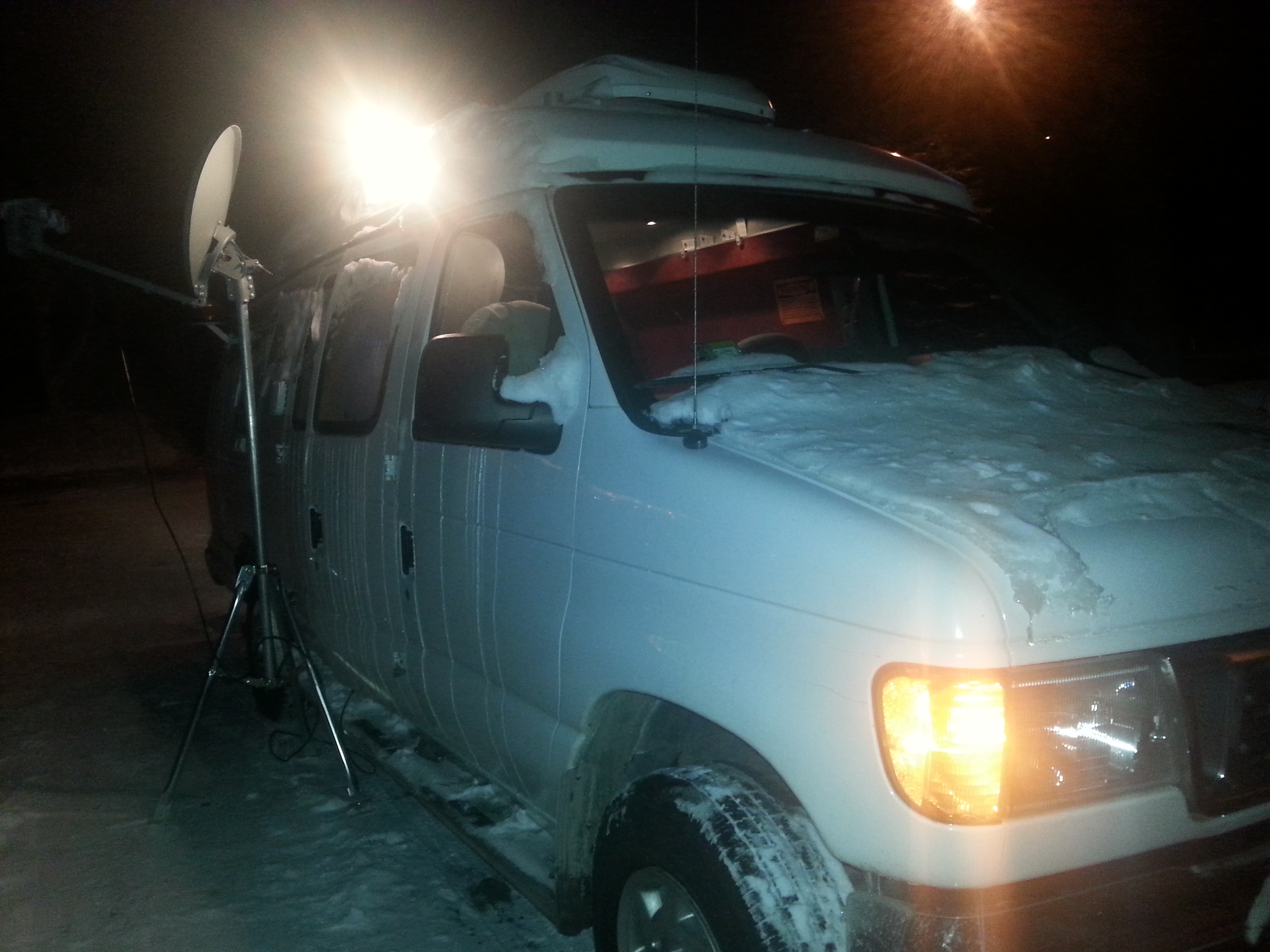
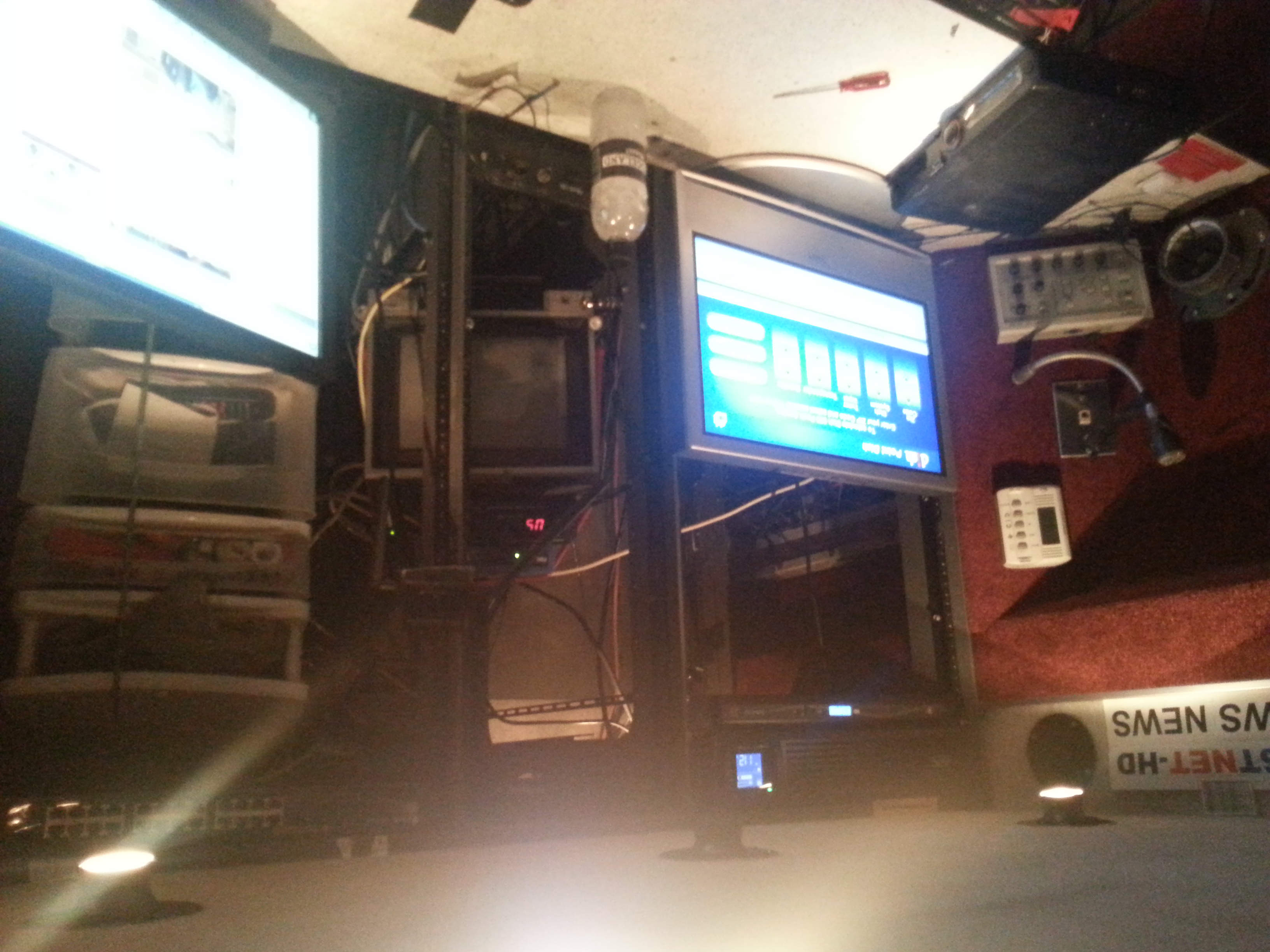
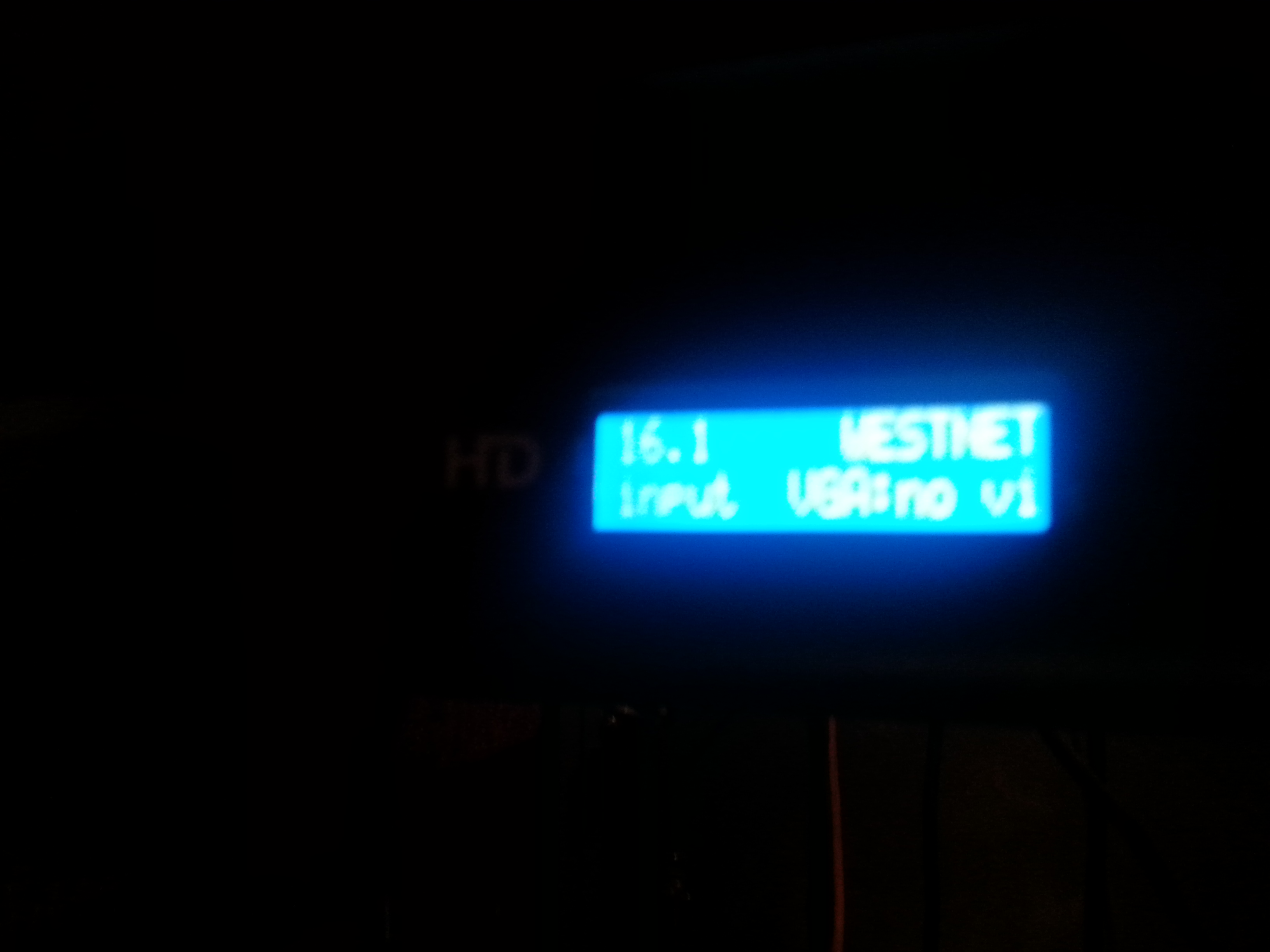
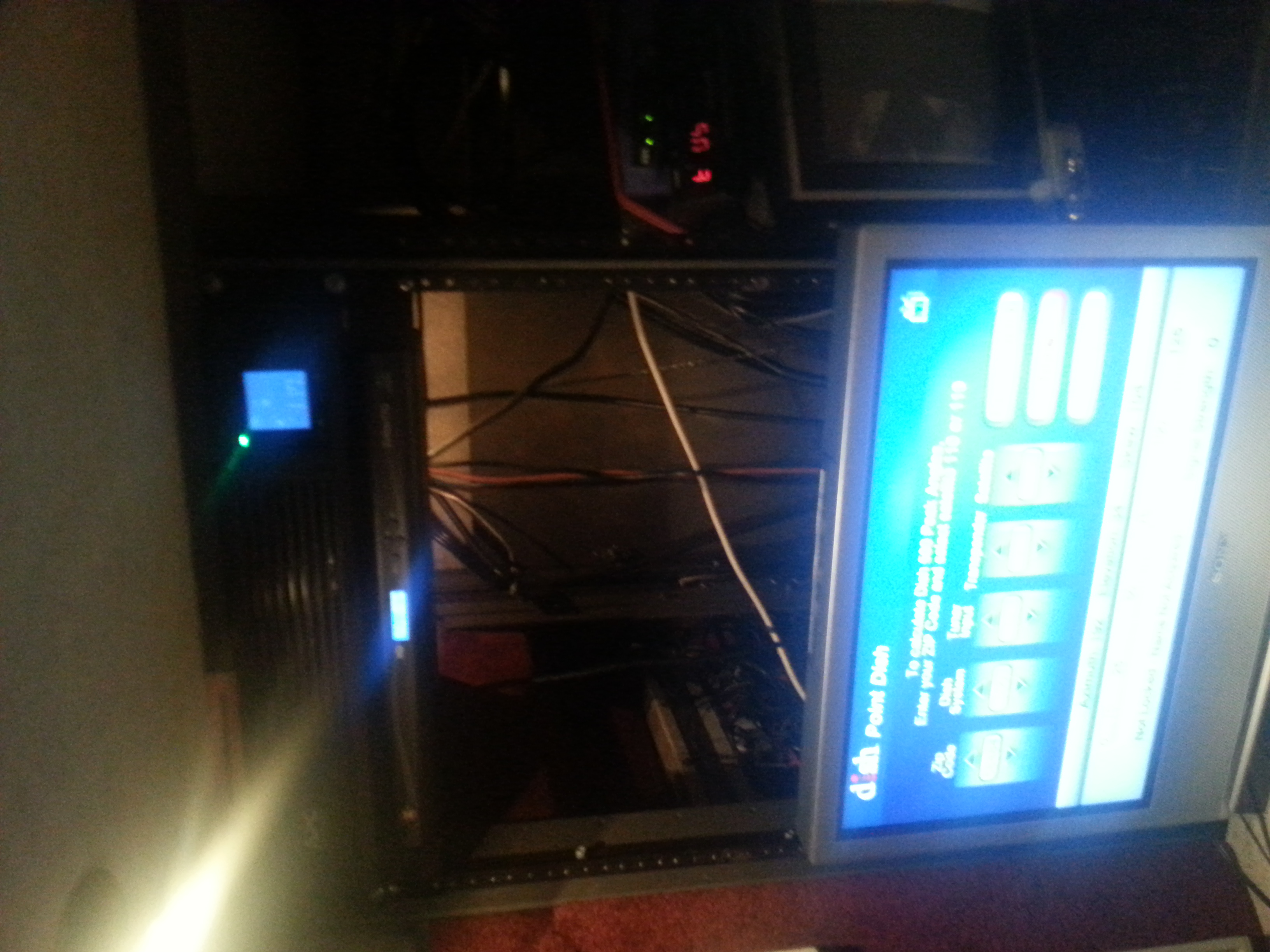 2015: Fiber backhaul upgrades at approximately 12 tower locations across Calgary. This is WestNet's single largest capital deployment since the 2006 city-wide Wi-Fi launch. The fiber backhaul eliminates the capacity ceiling that had constrained subscriber speeds and sets the stage for 100 Mbps service.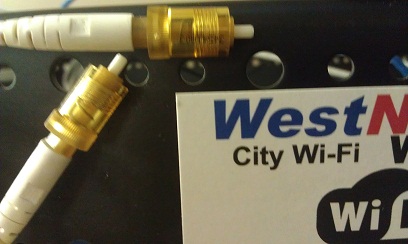
-
2016–2017US-IP Gateway + CRTC Carrier Registration2016: WestNet introduces its US-terminated IP gateway — Calgary subscribers receive a US-based IP address directly on their connection, no VPN required. WestNet becomes one of the first Canadian ISPs to offer this as a standard subscriber option. Enables access to US geo-restricted streaming, US banking portals, and US business services.
 2017: WestNet Wireless is formally registered as a CRTC telecommunications carrier in Canada — enabling carrier-to-carrier peering, Wholesale High-Speed Access eligibility, and full compliance with CRTC broadband service regulations. WestNet also holds FCC carrier registration in the United States, supporting the cross-border US IP termination and Verizon AS701 backbone services introduced in 2016.
-
2018–2019Event Wi-Fi Launch + Verizon Partnership Expanded

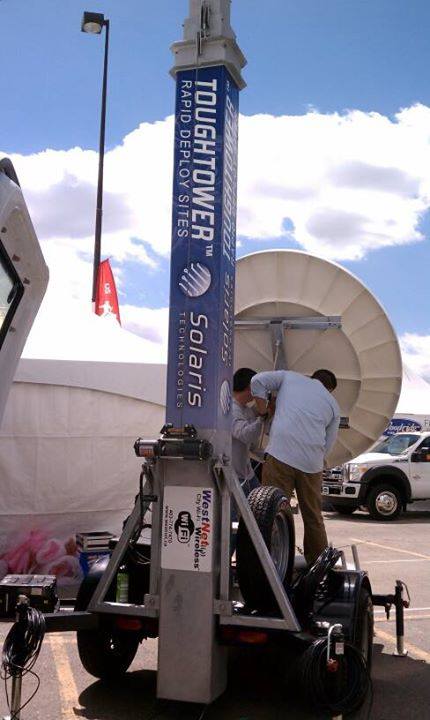
 2018: WestNet launches its event Wi-Fi service for Calgary corporate events, trade shows, outdoor festivals, and sports venues. The service leverages existing tower infrastructure for rapid temporary deployment of high-capacity wireless. More at westnet.ca/event-wi-fi.htm
2019: WestNet's Verizon global network partnership — in place since 2009 — is expanded and formalized as a dedicated product offering. US-based IP address termination, global traffic backhaul, and the Verizon AS701 backbone now power WestNet's premium service tiers as standalone consumer products. -
2020–2022Essential Broadband Through COVID-19 + Post-Pandemic ExpansionMarch 2020: COVID-19 lockdowns hit Calgary. WestNet's rooftop wireless infrastructure — as in the 2013 flood — proved more resilient than wired alternatives. WestNet commits to maintaining full capacity as an essential internet provider and waives temporary late fees.
WestNet had the domain masks.health registered and ready, and had pre-positioned two truckloads of medical-grade masks sourced in phases from 2015 through January 2020 — well before the pandemic began. This allowed WestNet to supply PPE to businesses, healthcare facilities, and essential services during the acute shortage period of March–April 2020, when commercial masks were unavailable through normal supply chains.
2020–2021: Despite construction restrictions, WestNet completes planned tower upgrades and begins groundwork for post-pandemic expansion.
2022: With restrictions lifted, full-scale tower deployment and site acquisition resumes, accelerating growth across South Calgary and Northeast Calgary.
May 2022: A clinical brain MRI at Foothills Medical Centre (Alberta Health Services) — GE 1.5 T scanner, 594 DICOM images, 14 series — documents head dimensions exceeding published adult male anthropometric norms, consistent with the macrocephaly noted at birth in 1982. No structural pathology detected across any sequence. Quantitative volumetric analysis benchmarked against the UK Biobank (40,000 subjects) reports ICV at the 80th percentile, total brain volume at the 96th percentile, and hippocampi at the 98th–99th percentile. Full documentation at westnet.ca/medical. -
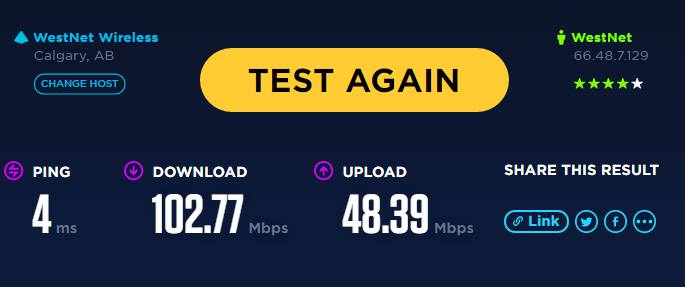
2023–2024100 Mbps Plans + speedtest.westnet.ca Updated + Coverage Map 20232023: WestNet's 100 Mbps city Wi-Fi tier launches — the company's fastest plan ever — made possible by the 2015 fiber backhaul and Verizon partnership. Available at WestNet Wireless Pricing Plans
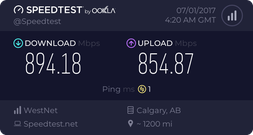
2023: speedtest.westnet.ca relaunched with a new interface — still powered by the Ookla node that's been part of WestNet's network since 2006, now with a modern UI for measuring download speed, upload speed, latency, and jitter. Try it at speedtest.westnet.ca
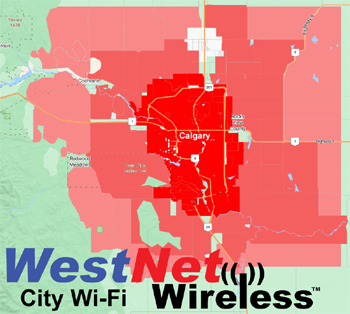
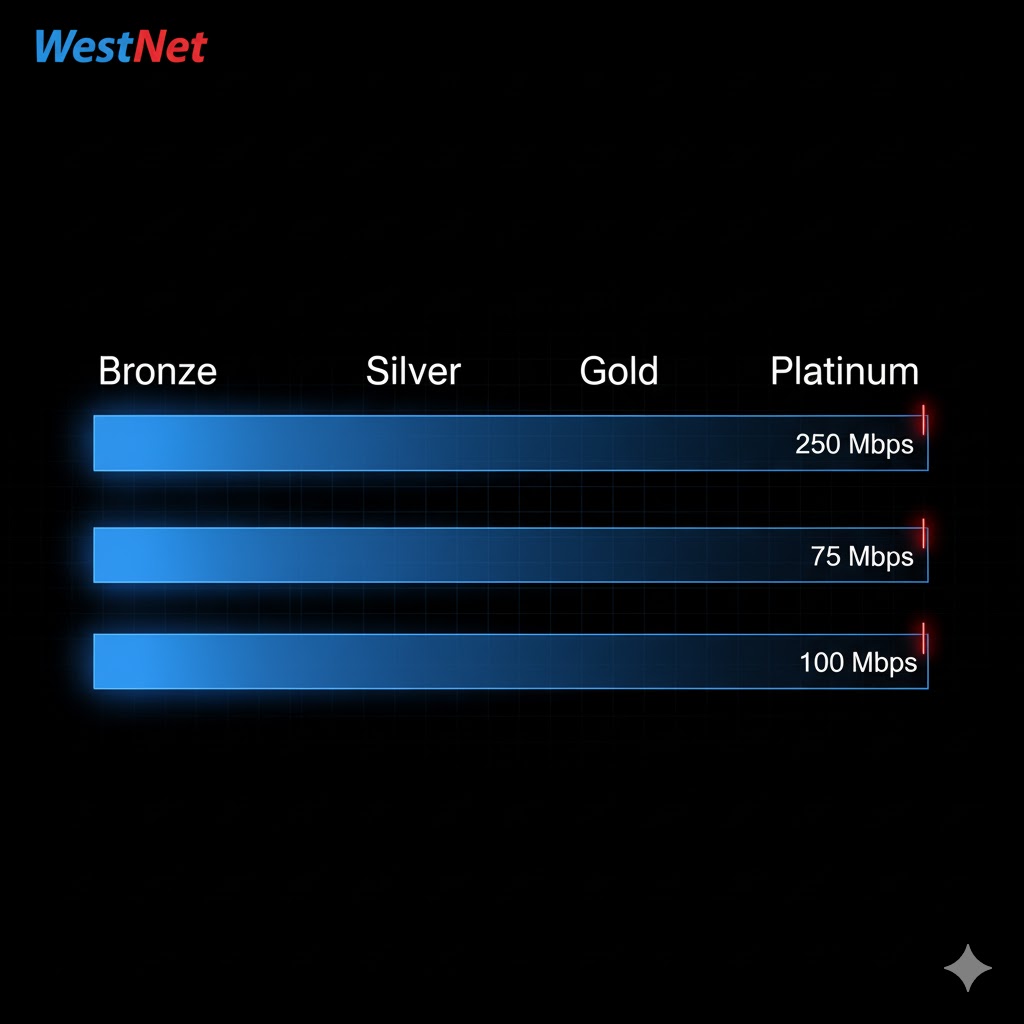 2023–2024: Coverage map updated. WestNet now serves 30+ Calgary communities. Full map at westnet.ca/coverage.htm
-
2025–202628 Years Strong — Continued Expansion2025: WestNet continues expanding city Wi-Fi into South Calgary and Northeast Calgary with new tower agreements and antenna deployments in underserved communities. New divisions launched: WestNet Dedicated VPN (dedicated IP, AES-256, from $9.95/mo), WestNet Bank (cross-border USD⇄CAD banking), and WestNet Credit Systems (unified US-Canada credit bureau) — expanding WestNet N.A. from a wireless ISP into a full-service cross-border technology and financial services provider.
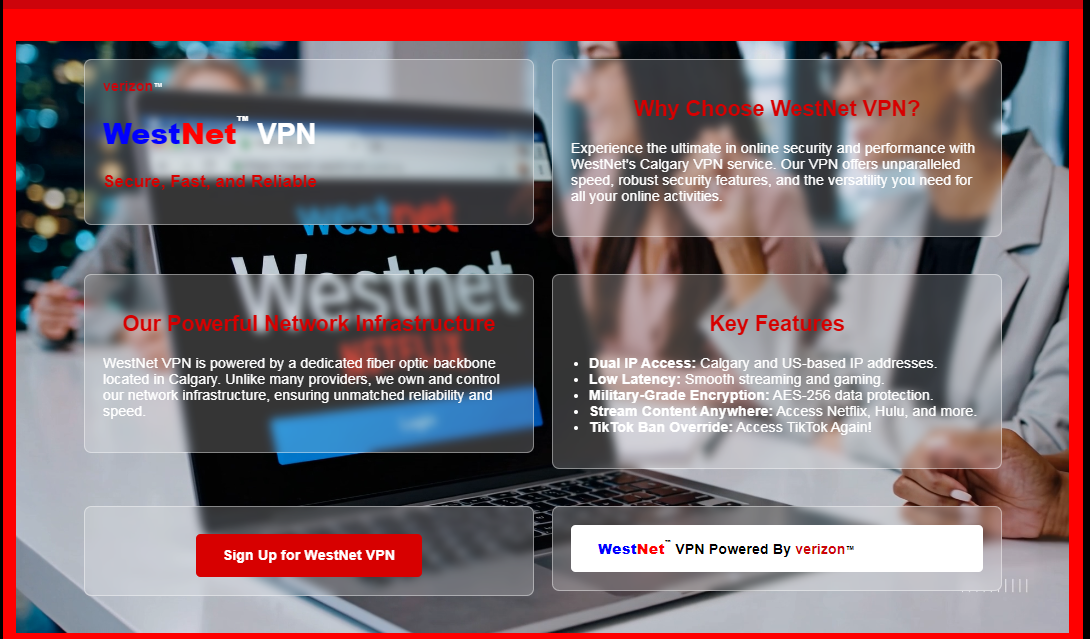
 April 4, 2026: WestNet N.A. marks its 30th year of continuous operation in Calgary. The company that began in a basement in 1998 now covers 30+ communities, survived two major Calgary crises (the 2013 flood and COVID-19 pandemic), and remains one of the city's longest-running independent telecommunications carriers.
WestNet N.A. — Celebrating 30 years of wireless innovation from Calgary, Alberta (1996–2026). -
2026A-OFDM Announced — Abdou Traya's Physical Layer Overhaul
 April 2026: WestNet announces A-OFDM (Abdou-Orthogonal Frequency-Division Multiplexing) — a bare-metal physical layer modulation architecture designed by Abdou Traya that achieves sub-millisecond wireless latency and extreme wall penetration at 2.4 GHz. The protocol builds on concepts Traya first explored in 2009 when he modified MoCA coaxial bridges with external antennas — radiating coax-native OFDM over the air and proving that multipath-hardened modulation designed for noisy cable environments could outperform standard Wi-Fi in real-world conditions. That 2009 experiment planted the seed for A-OFDM's core innovation: treating multipath reflections as constructive signal energy rather than destructive noise.
A-OFDM introduces five interdependent breakthroughs: Conjugate Interference Cancellation (CIC) which turns wall bounces into signal amplifiers; a UHF-style 50 kHz PSD control burst that concentrates legal power 400× denser than standard Wi-Fi to punch through concrete; Quiet Ramp zero-preamble sync eliminating 40–100 μs of wasted training overhead; one-time channel fingerprinting replacing continuous CSI feedback; and grant-free asynchronous MAC access removing all scheduling handshakes.
Power & Efficiency — Real-World Hardware ComparisonPatent application filed with priority date 2012, covering CIC conjugate pair transmission, narrowband PSD control signaling, Quiet Ramp zero-preamble synchronization, one-time channel fingerprinting, and grant-free asynchronous MAC access. Read the full A-OFDM white paper →
Linksys WRT54G (2003–2012 era, 802.11b/g)
Power supply: 12V / 1A = 12W wall draw
Broadcom BCM4712 radio: ~17 dBm TX, 54 Mbps PHY, ~25 Mbps real throughput
Efficiency: ~2.1 Mbps per watt
Range: ~35m indoors / ~100m outdoors open air
Through 1 concrete wall: signal drops ~12 dB — usable but degraded (~8 Mbps)
Through 3 walls: dead zone — link drops below -85 dBm receiver sensitivity
Linksys WRT3200ACM (2016+, 802.11ac Wave 2) — Stock firmware
Power supply: 12V / 3A = 36W wall draw
Marvell 88W8964 dual-band radio: ~22 dBm TX, MU-MIMO 4×4, 2.6 Gbps PHY
Real throughput: ~400–600 Mbps (5 GHz, line of sight), ~180 Mbps (2.4 GHz)
Efficiency: ~11–17 Mbps per watt
Through 1 concrete wall (2.4 GHz): ~90 Mbps — usable
Through 3 concrete walls: ~15 Mbps or dead depending on construction
5 GHz through 1 wall: ~120 Mbps. Through 2 walls: effectively dead
The 3× power draw buys ~8× the throughput — but wall penetration barely improves because the 20/40/80 MHz wideband spreads PSD thin.
WRT3200ACM + A-OFDM baseband (projected)
Power supply: 12V / 3A = 36W (same hardware, modified firmware/DSP)
TX power: same ~22 dBm total EIRP (legal limit)
Control burst: 50 kHz narrowband — PSD = 2.0×10⁻⁵ W/Hz (vs 5.0×10⁻⁸ for stock 20 MHz)
CIC constructive gain: +3 to +6 dB effective at receiver
Quiet Ramp: saves 40–100 μs per packet (no preamble)
Zero CP: reclaims ~20% bandwidth wasted on guard intervals
Projected real-world performance:
Through 1 concrete wall: ~220 Mbps (vs 90 stock) — CIC multipath gain + PSD punch
Through 3 concrete walls: ~60–80 Mbps (vs dead/15 Mbps stock) — narrowband control burst punches through, CIC payload follows
Through 5 walls / 3 floors: ~15–25 Mbps (stock: absolute dead zone)
Latency: < 1 ms air interface (vs 5–15 ms stock Wi-Fi)
Efficiency: ~17–22 Mbps per watt (same power draw, more usable throughput from CIC gain + zero CP)
A-OFDM doesn't increase total transmit power — it concentrates and shapes it. The 36W adapter powers the same radio, but the DSP uses it 400× more efficiently on the control channel and reclaims 20% wasted spectrum on payload.
Key Milestones at a Glance
- 1982 — Abdul Traya born at Calgary General Hospital, Bridgeland
- 1996 — Abdul Traya, age 14, conceives the idea for affordable wireless internet in Calgary; founds Traya Net on MCI WorldCom backbone
- 1997 — CalgaryFinder.com launched by Abdul Traya — one of Calgary's first locally built real estate and business listing portals
- July 1998 — Registers AppleiMac.com two months before iMac G3 launch; international media battle begins (CNN, MSNBC, NYT, CNET)
- 1998 — Founds WestNet Wireless Communications Ltd.; Traya Net Inc. parent company formed; WestNet Webmail launches at webmail.westnet.ca
- April 27, 1999 — Apple domain dispute settled; settlement funds wireless development
- May 1999 — Time Magazine interviews Abdul Traya for “Class of 2005” publication
- 2000 — WestNet Action News digital media division launches
- 2001 — Featured on front page of University of Illinois Law Review (2001) — legal analysis of the Apple domain case
- August 2001 — WestNet WireCELL announced — Wi-Fi-based cellular concept over CDMA
- 2001 — Albert Park/Radisson Heights community Wi-Fi launched — Calgary's first community wireless network
- 2001 — WestNet GoodPeople™ Insurance launched — auto & home insurance for USA & Canada
- December 2, 2002 — Calgary's first commercial Wi-Fi network announced; speedtest.westnet.ca launched
- 2002 — UPC Barcode Registry launched — official UPC codes from $99; barcode lookup service; one of WestNet's longest-running digital services
- 2004 — Permanent base station installation begins; site agreements and frequency planning finalized
- October 2005 — Motorola + DDL-Networks partnerships; 1,500 branded adapters ordered
- February 22, 2006 — City-wide Wi-Fi launches across East Calgary; up to 10 Mbps
- April 4, 2006 — Nortel Networks CDMA 1X-EV-DO base station activated in Calgary
- Mid-2006 — Ookla Speedtest.net node added to speedtest.westnet.ca
- November 2006 — City-wide Wi-Fi pricing: $20.99/month or $199.99/year
- December 2006 — Patent filed for proprietary WN Wi-Fi soft-handoff protocol
- January 2007 — WestNet opens CDMA network to any compatible device — before Verizon does the same
- 2008 — AWS spectrum auction application submitted and rejected; appeal filed with Ministry of Industry
- March 23, 2009 — All EVDO base stations upgraded to Rev.A (3.1 Mbps / 1.8 Mbps)
- 2009 — Verizon global network partnership established (AS701 backbone); expanded 2019
- 2009 — MoCA coaxial bridge antenna experiment — Traya radiates coax-native OFDM over the air; seed concept for A-OFDM
- July 20, 2009 — 10,000 registered users on WestNet Wi-Fi
- August 2010 — 17,500 subscribers; Business in Calgary national feature — “Ground Breaking Wireless”
- December 2010 — Joins CCTS as a participating telecommunications carrier
- 2011 — 30,000+ subscribers; corporate rooftop link program expands; national media coverage (London Free Press)
- 2012 — 802.11n deployed city-wide; network capacity doubled; MDU program launched; WestNet Webmail rebuilt (IMAP, mobile-first)
- 2012 — CalgaryFinder.com peak: over $1 billion in real estate listed through the platform
- June 2012 — WestNet Autonomous Toyota Land Cruiser program initiated; Level 2 system built in-house using LIDAR, radar, Sony CMOS cameras, and WestNetV2 CANbus; westnet.ca/autonomous
- June 2013 — Calgary flood: WestNet's rooftop wireless stays online when wired ISPs go dark — critical infrastructure moment
- 2013 — 802.11ac (Wi-Fi 5) deployed city-wide; major post-flood corporate subscriber influx
- 2014 — Nine new Calgary communities added: Forest Lawn, Marlborough, Renfrew, Tuxedo Park, Highland Park, Ramsay, Bowness, Killarney/Glengarry, Sunalta
- December 2014 — MHSV (Mobile HotSpot Vehicle) fully deployed: satellite van with dual uplink and 16.1 WESTNET News HD on-air
- 2015 — Fiber backhaul upgrade completed at ~12 tower sites; 100 Mbps capability enabled
- 2016 — US-terminated IP gateway service introduced
- 2017 — CRTC telecommunications carrier registration; FCC carrier registration (US)
- 2018 — Event Wi-Fi service launched for Calgary corporate events, festivals, and venues
- 2018 — WestNet Humanitarian Services (WHS) formally established as a registered charity
- 2019 — WestNet CyberSecurity R&D division launched
- 2019 — WestNet Smart Traffic — intelligent traffic control system enters development
- 2020 — masks.health domain + two truckloads of medical masks pre-positioned (sourced 2015–Jan 2020); WestNet stays online as essential provider through COVID-19
- May 2022 — Clinical brain MRI at Foothills Medical Centre (AHS): no pathology; ICV 80th pct, total brain volume 96th pct, hippocampi 98–99th pct vs. UK Biobank norms — westnet.ca/medical
- 2023 — 100 Mbps city Wi-Fi tier launched; speedtest.westnet.ca relaunched; coverage: 30+ Calgary communities
- 2024 — 1515 Smart Breaker with LCD & IP connectivity enters development
- 2024 — Missing Persons Technology platform developed
- 2024 — WestNet VIN Decoder, Paint Selector, and Aviation Products catalogue launched under Innovations
- 2025 — Wi-Beam 0.6m 6GHz PTP Antenna Pair released — high-performance microwave backhaul in partnership with WiLAN
- 2025 — WestNet Dedicated VPN launched; WestNet Bank (cross-border) and WestNet Credit Systems announced
- 2025 — WestNet Fleet Tracking system and Heavy Industries logistics division operational
- 2026 — 30th year of continuous service; WestNet Webmail mobile-first portal relaunched
- April 2026 — A-OFDM (Abdou-OFDM) announced — sub-millisecond latency physical layer with CIC, UHF PSD wall penetration, zero-preamble sync; patent priority 2012